I
had a few days to kill before I was to meet my cousin in Mexico City,
but hadn't until the morning of my departure from Guadalajara settled
on a destination. I decided to follow a couple of strong
recommendations in the direction of Guanajuato, an old town known for
its odd geography as a mining town and alternately as having a
bustling college scene.
It
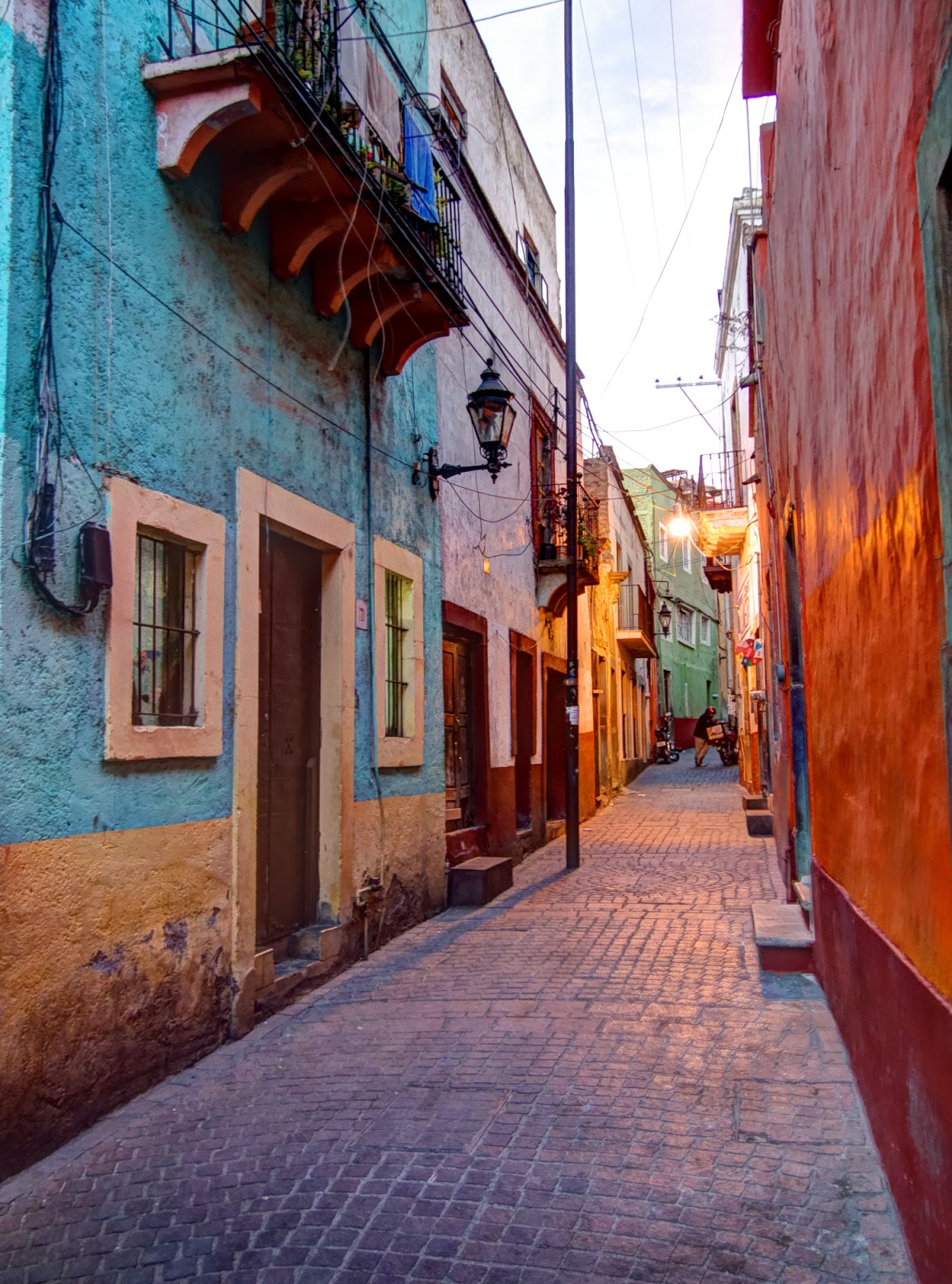
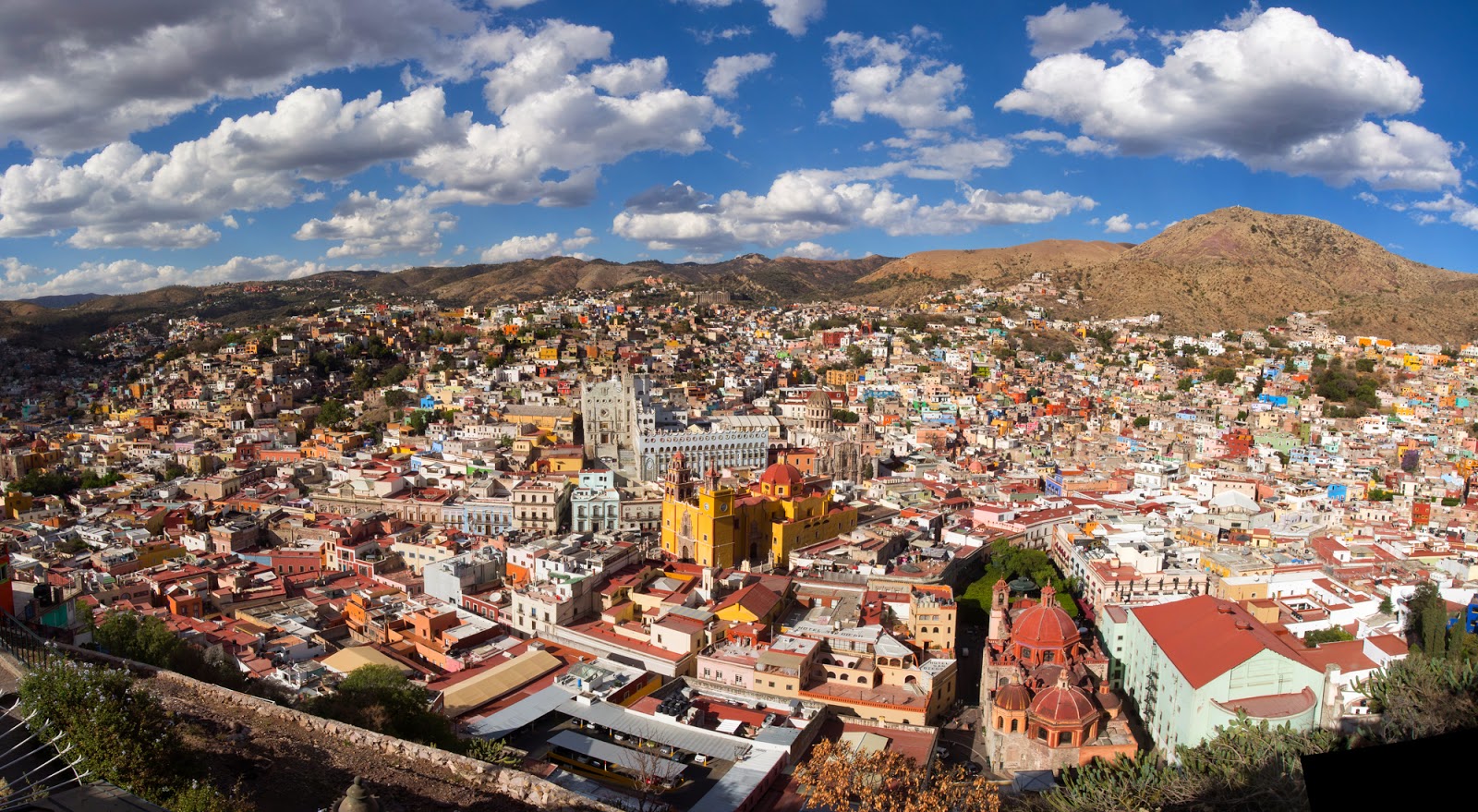
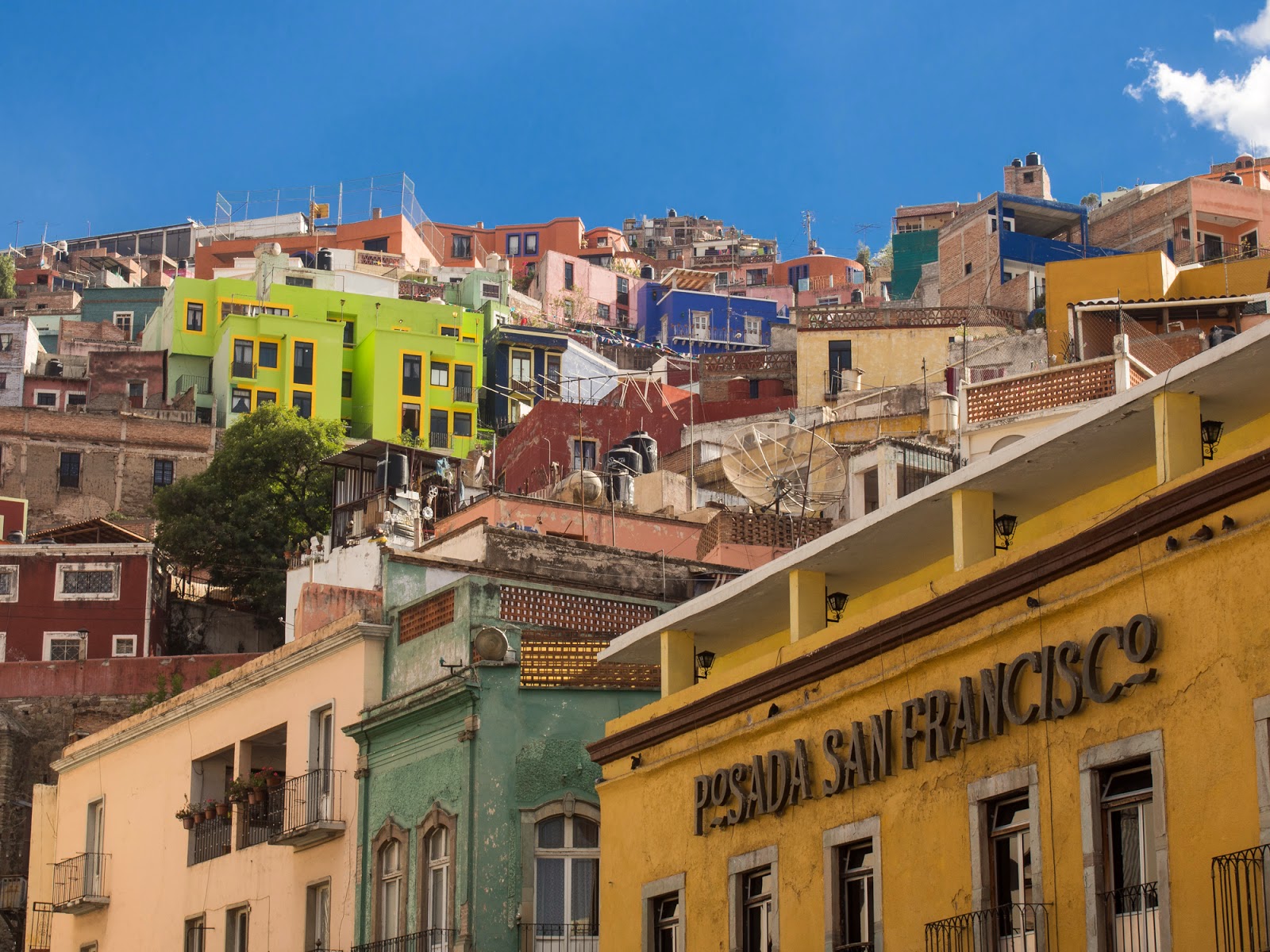
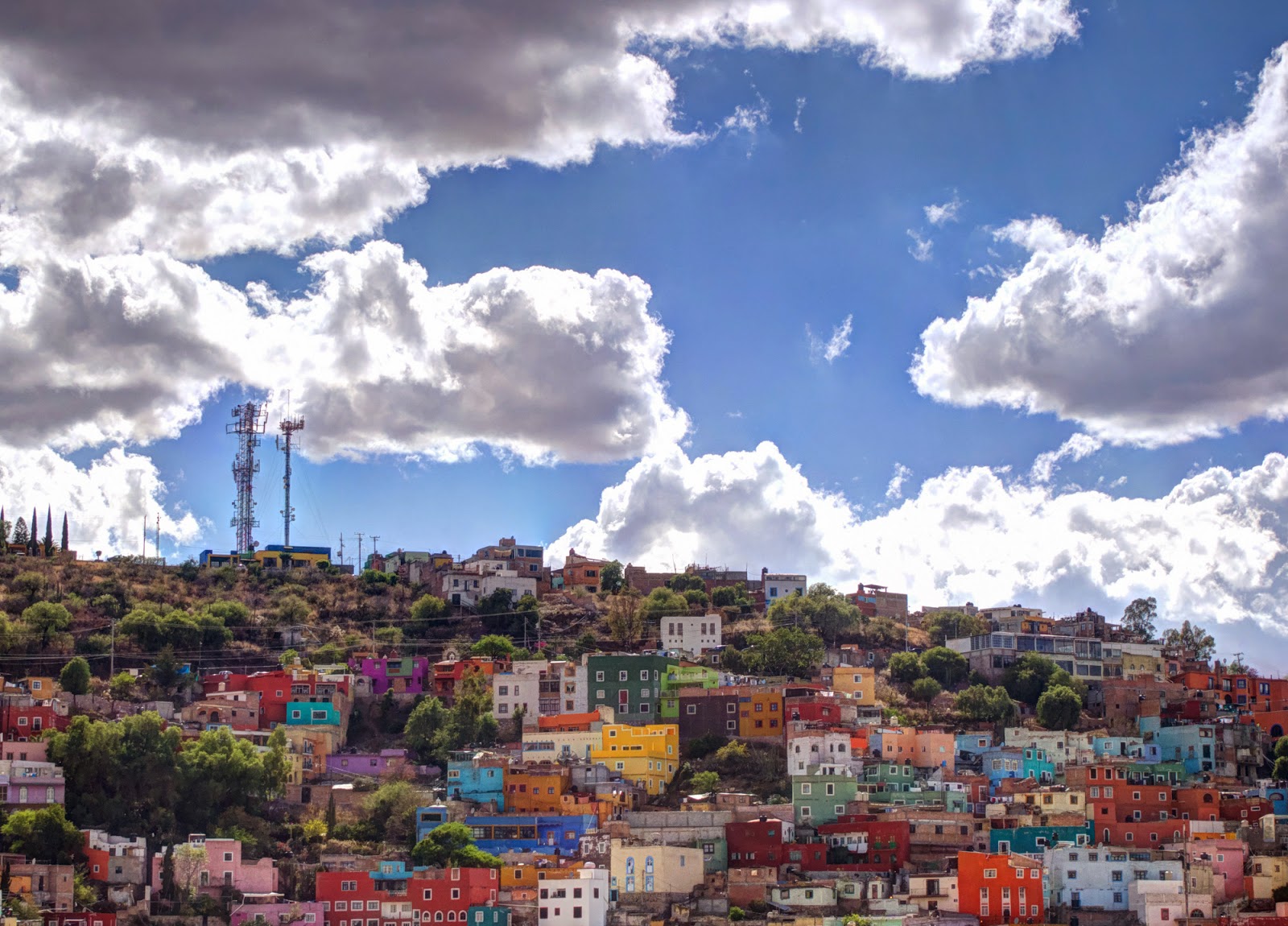
was hard not to be instantly smitten. The historic center of
Guanajuanto is cradled in a valley between mountains and cheerful
homes of every color spill from the mountainsides and collect in the
middle so densely there's only but a little room for vehicular
traffic. The cars are driven away from the surface to underground
tunnels passing each way through the city, leaving the intimate
cobblestoned alleys and passageways between buildings for feet and
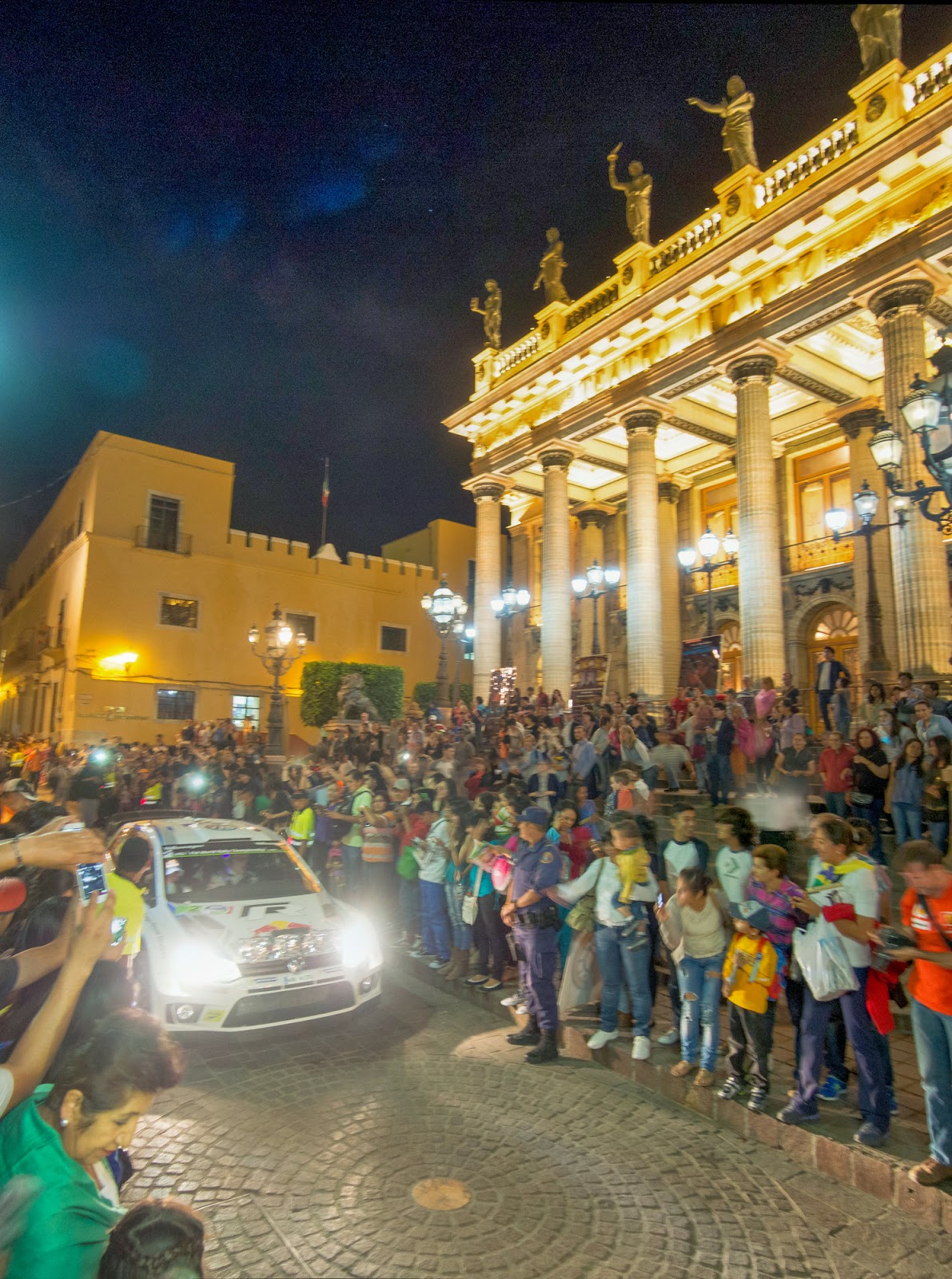
bicycles alone. The city's years as one of the world's leading
silver producers treated is well, as is evinced by the grandeur of
its cathedrals, theaters, and civic buildings.
Being
a university town, there's no shortage of hip cafes with good food
and coffee – often playing American music. I've frequently found
there's a latency effect in the way music is enjoyed geographically,
and I was hearing a lot of the indie tracks that were hot when I was
in college five or six years ago: Radiohead, Clap Your Hands Say
Yeah, and the like. Live music is abundant as well, and there are
popular outdoor film screenings in and near a few of the vibrant
public squares.
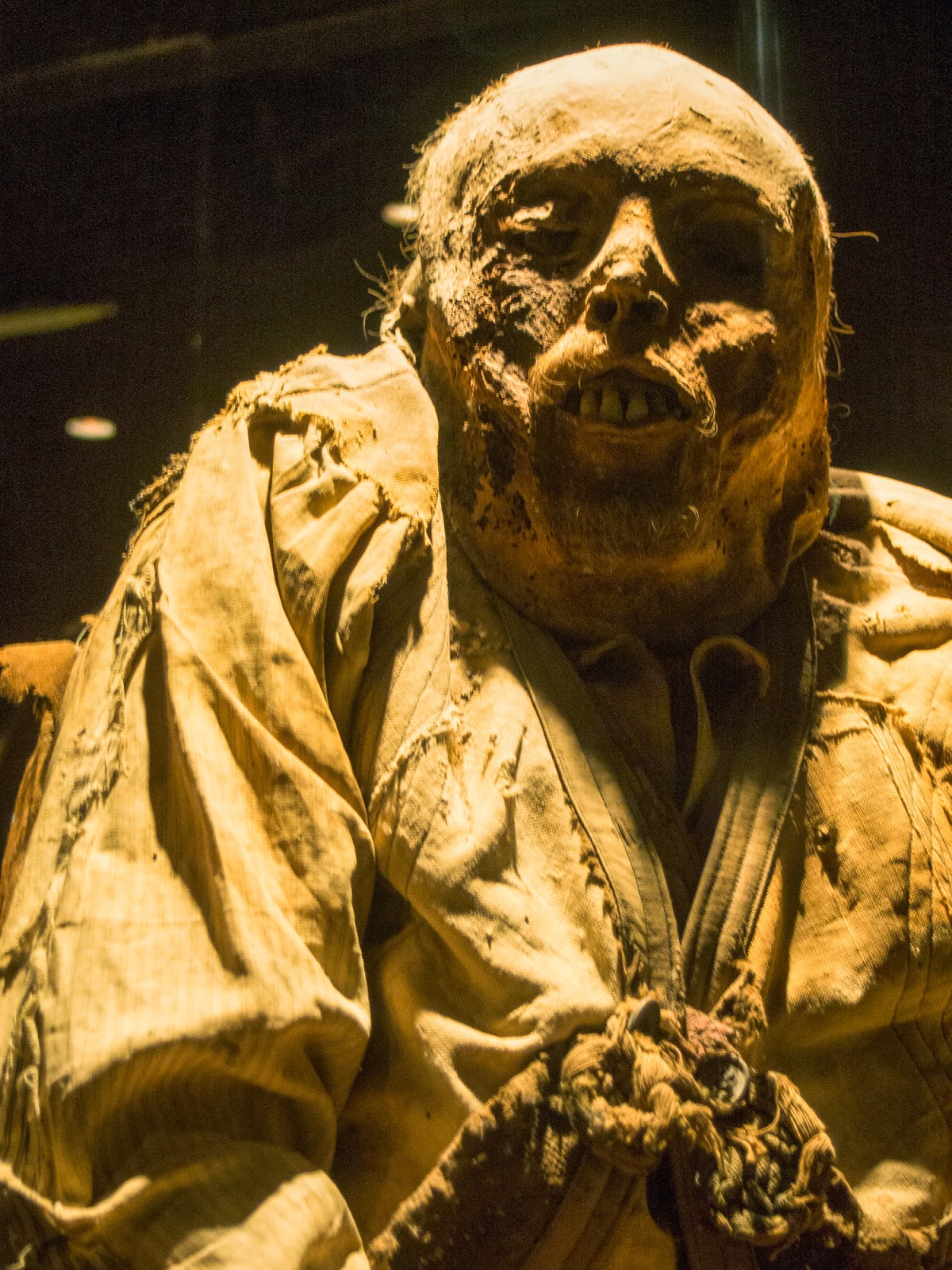
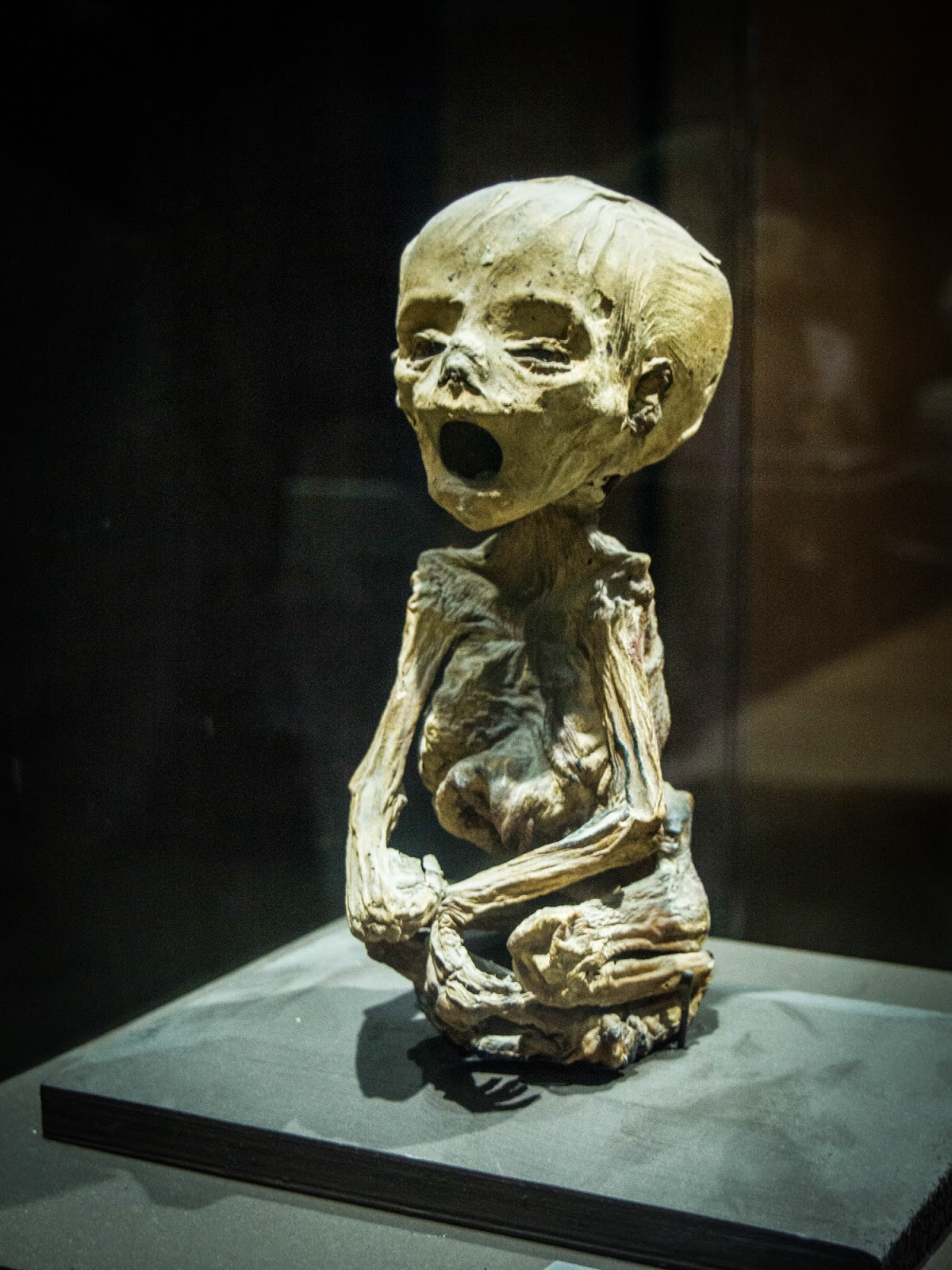
One
of the city's greater tourist attractions is el Museo de las Momias,
with a permanent collection of unusually mummified corpses
disinterred from local cemeteries. The experience is made all the
more gruesome and strange by its playful irreverence – many plaques
adjacent to specific mummies have monologues detailing what the
mummies had been through since being buried, and all in first
person narrative. One of the museum's prizes is the smallest mummy
in the world, a four to five month old fetus.
More
than once I found myself underestimating distances in the city's very
not-to-scale tourist map, and I'd then be panting and sweating for
hours only to forget what I was working so hard to see and caring
much less by the time I arrived. I think it behooves someone
visiting Guanajuato's outlying sights to figure out the local bus
situation.
A
Japanese traveler by the name of Kaz I had met in Guadalajara ended
up in my same hostel, and we met up for dinner and drinks. I had
molé enchiladas and dark beer. Here and a few places elsewhere,
dinner is preceded by cuts of bread with a terribly bland tomato
sauce – like salsa without the heat. Kaz explained to me how
competitive eating is out in Tokyo and renting karaoke booths and
going out singing solo is in. I taught him how to make and “L”
sound.
Excited
to share my love of mezcal, I pulled Kaz into my our first mezcalria,
and then another, only to be wildly disappointed each time. Mezcal,
with its complex layers of smoke and tropical fruit, is enjoying a
new respect and reverence from New York's bartenders, and in my mind,
mezcalrias ought to be dimly lit smoky affairs with only a couple of
wizened old Mexicanos huddled over the bar with a veritable library
of local hootch on the walls. Instead, both of the Mezcal bars
featured not a wealth of Mezcal varieties, but rather a long list of
a single cheap mezcal mixed with sugar and different artificial
flavors and served in plastic cups. I ordered a peanut and an Oreo,
and couldn't be bothered to finish.
The
owner of my hostel I checked into is one cool Mexicano. His English
is probably excellent, or at least it seemed so... but he refused to
use it. Instead, he scales his Espanol based on the proficiency of
his guest, forcing them to improve. His place had a very homey feel
and an excellent view from its rooftop patio where its myriad guests
meet and swap war stories. I met another American bartender who was
aiming to be on the road over a year and had already spent about a
month in Guanajuato at that point.
By
the time I left, Guanajuato was one of the most interesting
destinations I had never prior heard of that I've now visited. I'm
going to miss its narrow alleyways and vitality and I look forward to
returning one day.
A
bus brought us back to another Guadalajara suburb, Tonala, where the
Fortaleza bottles are blown into their shape by hand and by mouth.
Globs of molten red glass are pulled from a heat belching furnace and
are rolled into a cylinder shape before being placed in a mold and
then blown into their final form through a long metal tube with a
mouth on one end. Were one to inhale instead of exhale, they would
end up in the hospital. We each got a chance to blow our own bottles
into shape.
The
man overseeing the operation holds the record for largest glass
bottle blown by a single individual, a feat he repeats a couple times
a year including, luckily, the day of our visit. He has to get on a
step ladder to blow the giant wobbling mass of red hot glass into its
mold. The final product could certainly hold a heck of a lot of
tequila.
Day
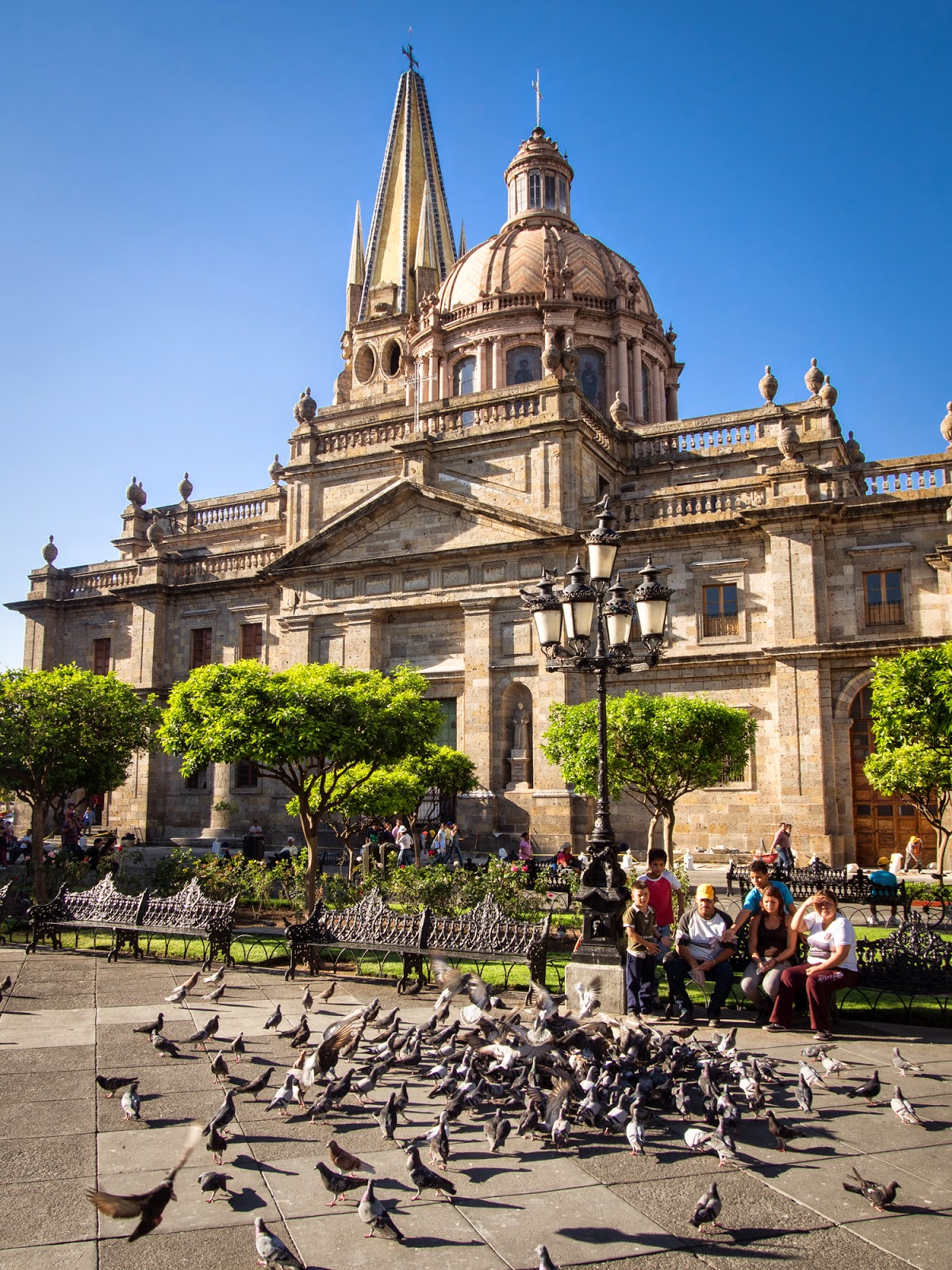
time in Guadalajara central treated us to a bustling cityscape of
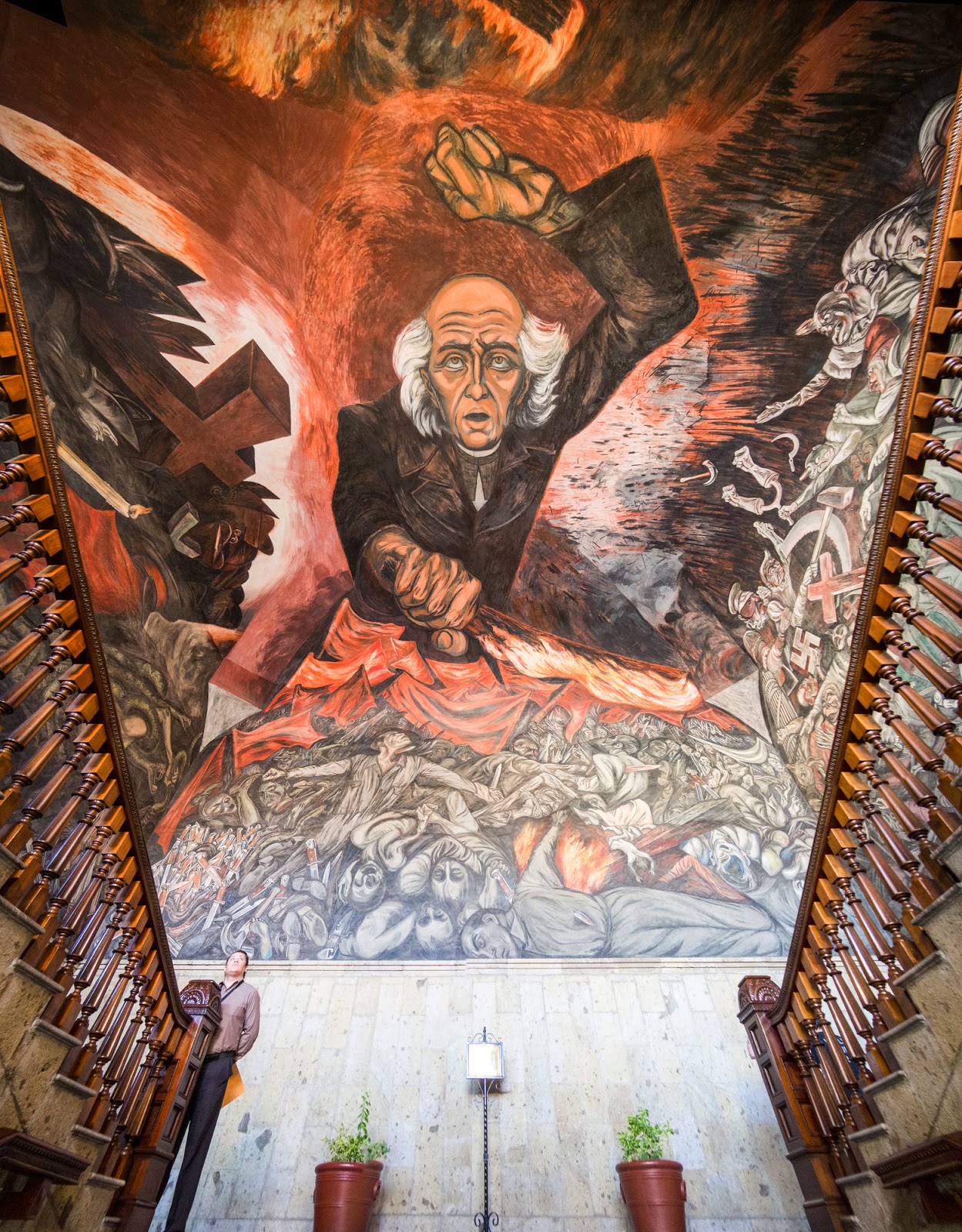
classical colonial beauty. In the governor's palace I laid my eyes
on my first renowned Mexican mural, a massive piece by Jose Clemente
Orozco featuring a massive depiction of Mexican hero Miguel Hidalgo
gazing alarmingly over a scene of religious and political leaders
causing chaos and violence. The infinitely more famous Diego Rivera
was a poster boy for socialism. Orozco seemed to regard all
politicians as crooks regardless of their alignment. In a set of his
murals in a building constructed to house orphans, his final strokes
were made to cover up his already painted portrait of the governor
that commissioned that set of works. The same building features an
image of Cortez being crooned by an angel while he sets to slaying
natives with a sword. His armor looks improbably mechanical and even
robotic, a twist that makes the armor look foreign, mysterious, and
dreadful in a way that I'm sure the natives must have felt.
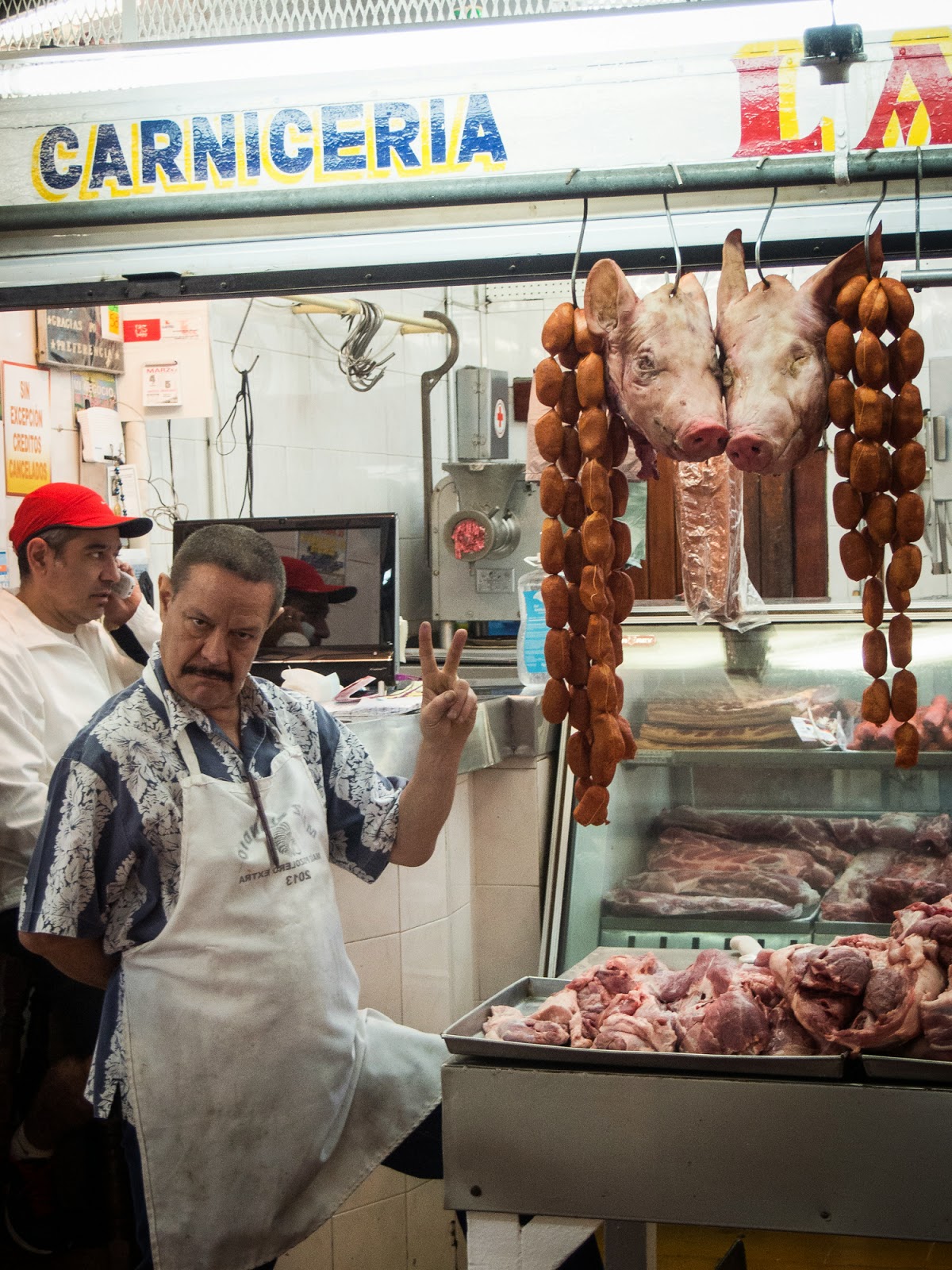
There
was also time to romp around an enormous market full of piles of odd
looking animal parts and pirated DVDs. It looked and even smelled
like many of the markets I had seen in Southeast Asia. I wonder if
perhaps there's some kind of popular cleaning agent at work that's
banned in the states.
The
final party of the Fortaleza sponsored trip took place on the rooftop
bar of our downtown hotel. Guillermo poured us our last shots of
tequila for the trip and on top of all the prior generosity, gifted
each of us a bottle of his blanco.
Things
were surprisingly well behaved that night... that is until everyone
got to the after party at a gay strip club down the block. For a
couple of hours a bunch of straight gringos took the place over and
started a real ruckus on the dance stage. I may or may not be
awesome at strip pole dancing. I refuse to comment on whether a
thing like that might have even happened. Later in the night the
stage was reclaimed by lip-syncing trannies. It was a Fat Tuesday
party and masks were distributed to all the guests (mine had a pink
color that wouldn't rub out of the skin on my face for half a week).
Guillermo found one of the trannies uncomfortably convincing. Things
happened that made the gay scene in New York look rather tame.
The
next day was full of goodbyes. Most people had to go right home. My
adventure was just beginning. I don't think I ever enjoyed such a
wealth of hospitality from people I had never met before as was
shared by Guillermo Sauza, his son, and his employees. I had a
fantasy of what a few rowdy nights in hot and dusty Mexico should be
like, and the time I spent with them, among locals and expats, other
guests like myself, and copious amounts of tequila certainly
fulfilled that fantasy. Fortaleza is setting up a guest house for
industry visitors to stay at the distillery to harvest, crush, and
distill agave – to actually learn how it's done with their hands –
and I don't think my arm has to be twisted too hard to get me back to
Tequila. ¡Viva Fortaleza!
The
town of tequila sprouted from the base of a now extinct volcano that
was originally responsible for creating the unique terroir that makes
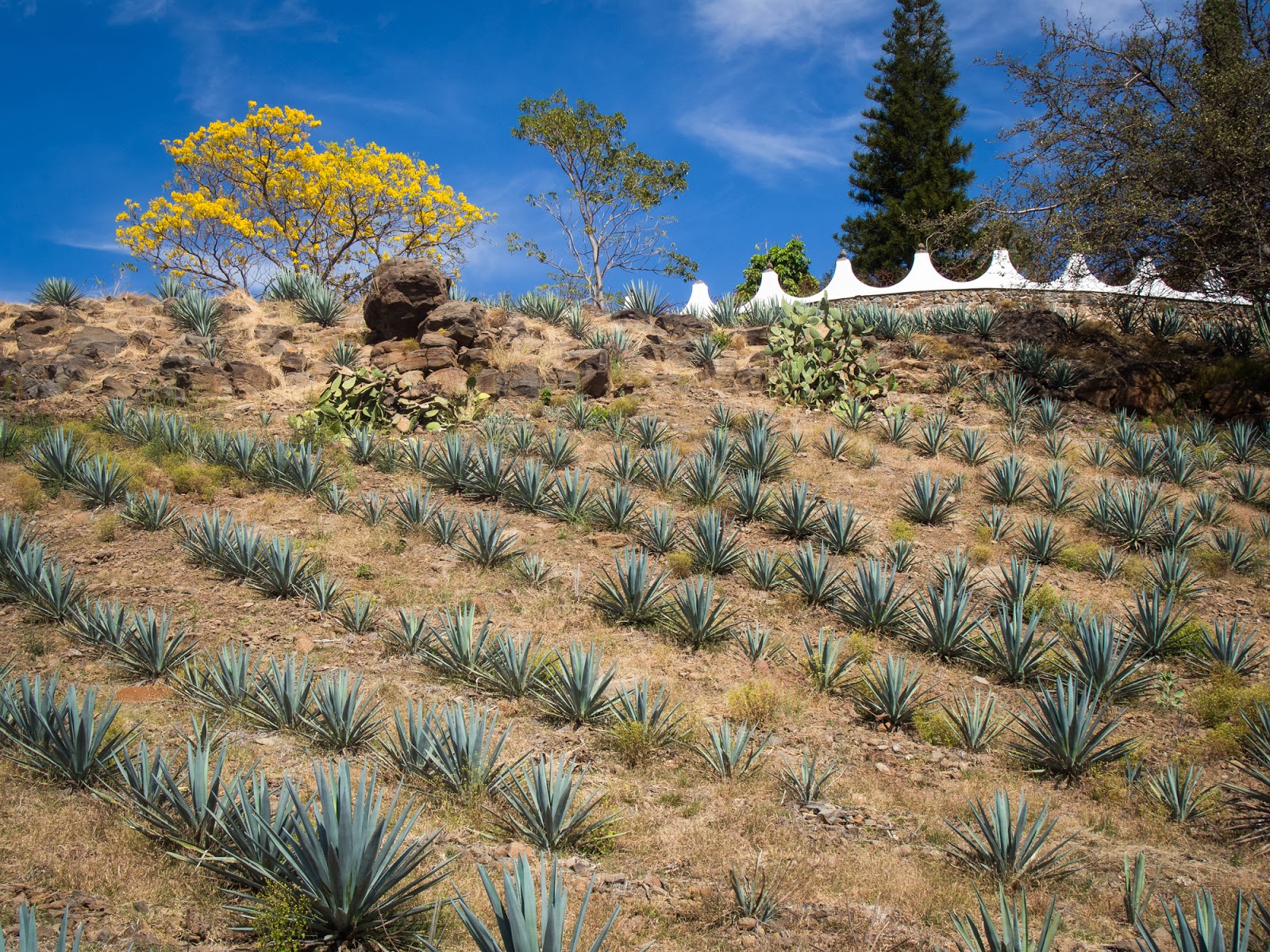
tequila's appellation so important. Agave grown in the valley grows
small and has deep roots in a soil featuring obsidian and a great
minerality. The plants grow larger and more dense with sugar in the
mountains thanks to an abundance of iron there.
There
are over 240 species of agave. Somewhere between 30 and 40 are used
to make mezcal. Only one agave, called weber or blue agave, can be
used to make tequila, and it has to be grown within a government
controlled appellation region.
Agave's
life cycle is too long to repopulate fields by traditional methods,
so fields are repopulated by plucking and replanting rhizomes, little
clones that each plant will sprout four to five of in its lifetime.
The plant signals its maturity by oozing a red goo, rich with the
starch so important for distillation. At that stage, a jimador will
cut the agave out of the ground and remove all of its fronds, leaving
only the piña.
Each piña
will yield roughly twelve bottles of tequila. The piñas
are then transported by truck, or even still burros in rough weather
or uneven terrain. The piña
must then be cooked. Many of the big distilleries today, including
Sauza, Cuervo, and Herradura, shortcut the process using a chemical
cooking method with machines called diffusers. Traditionally, the
piñas
are crushed by a large stone wheel called a tohoma. Many
distilleries still implement a percentage of stone crushed agave –
Don Julio does, but they don't disclose the percentage – but
Fortaleza is the only distillery on the scene to use stone crushing
exclusively. This process extracts mosto, the juice that will be
fermented. The first distillation yields ordinario. The second,
tequila.
In
all, we toured three distilleries and I probably had a couple hundred
dollars worth of fine aged tequilas, including an extro añejo
aged nine years retailing for $230 a bottle and a three, four, and
five year blend retailing at $500. A passionate young representative
at Don Fulano opened a rare master blend for us to try, his uncle's
swan song as he put it, as it was the last blend his uncle made
before passing.
The
Sauza name was sold decades ago when the owner thought the business
wouldn't remain family run. The Sauzas retained a 30% share, but the
company was run at a loss to dilute those shares. Now Guillermo and
his son Billy are underdogs in a town their family helped build.
Ceurvo wants to turn the place into something of a tequila themed
amusement park, and they drew a mockup of the town with a big tequila
train running right through the Sauza family's property.
Fortaleza Distillery
Walking
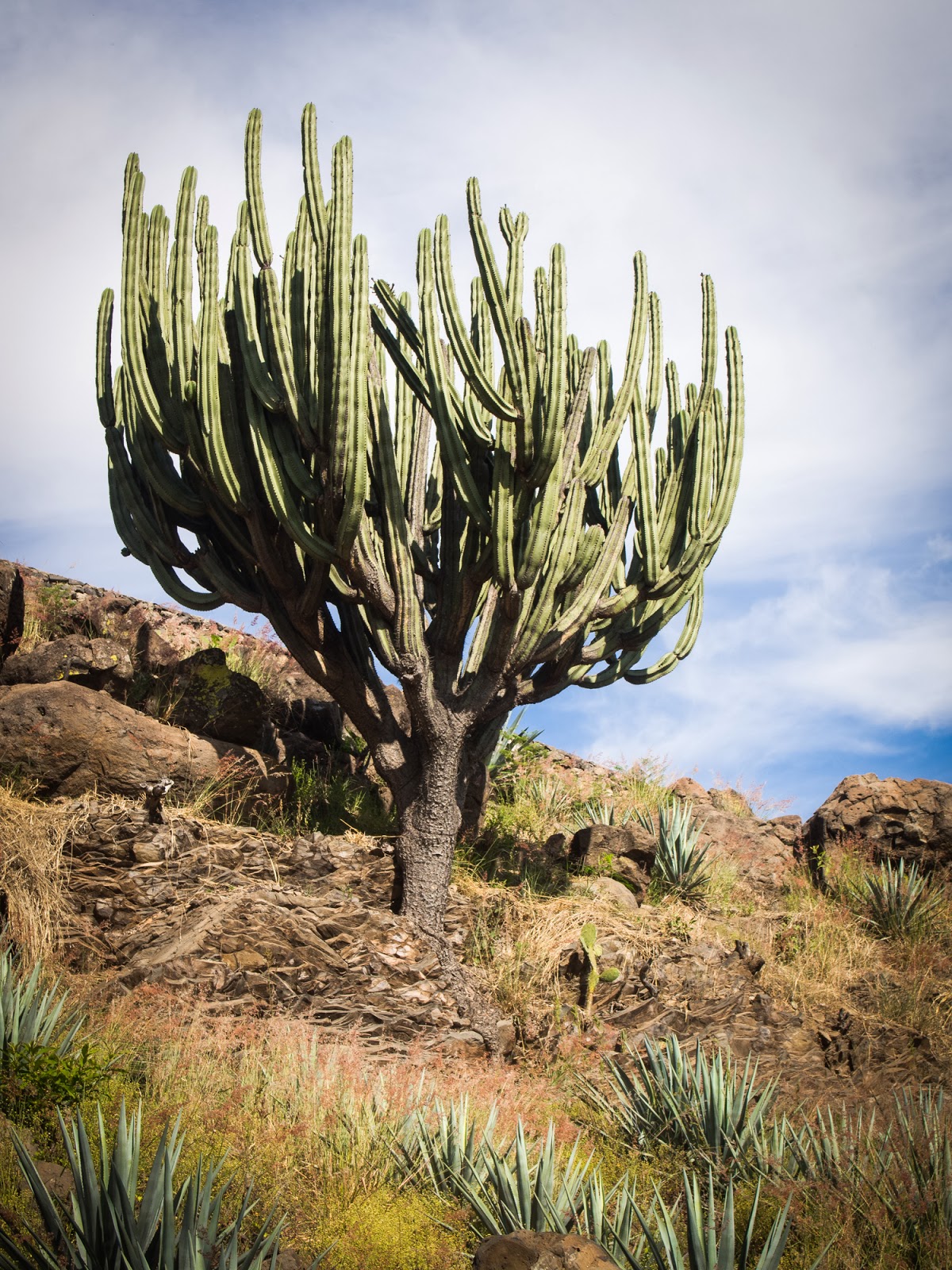
through agave fields framed by other natural growth was oddly
soothing. The topography wasn't at all unlike that where I grew up
in Southern California, just being perhaps an amplified version of
it. The agave, cactus, tamarind trees, and all kinds of goofy
looking plants I couldn't name, contorting themselves into clever
shapes to survive in such an arid environment, had me feel like I was
walking the the landscape of a Dr. Seuss book. By sunset, the clouds
were deeply stained in pink and the blue in the agave glowed all the
bluer.
This
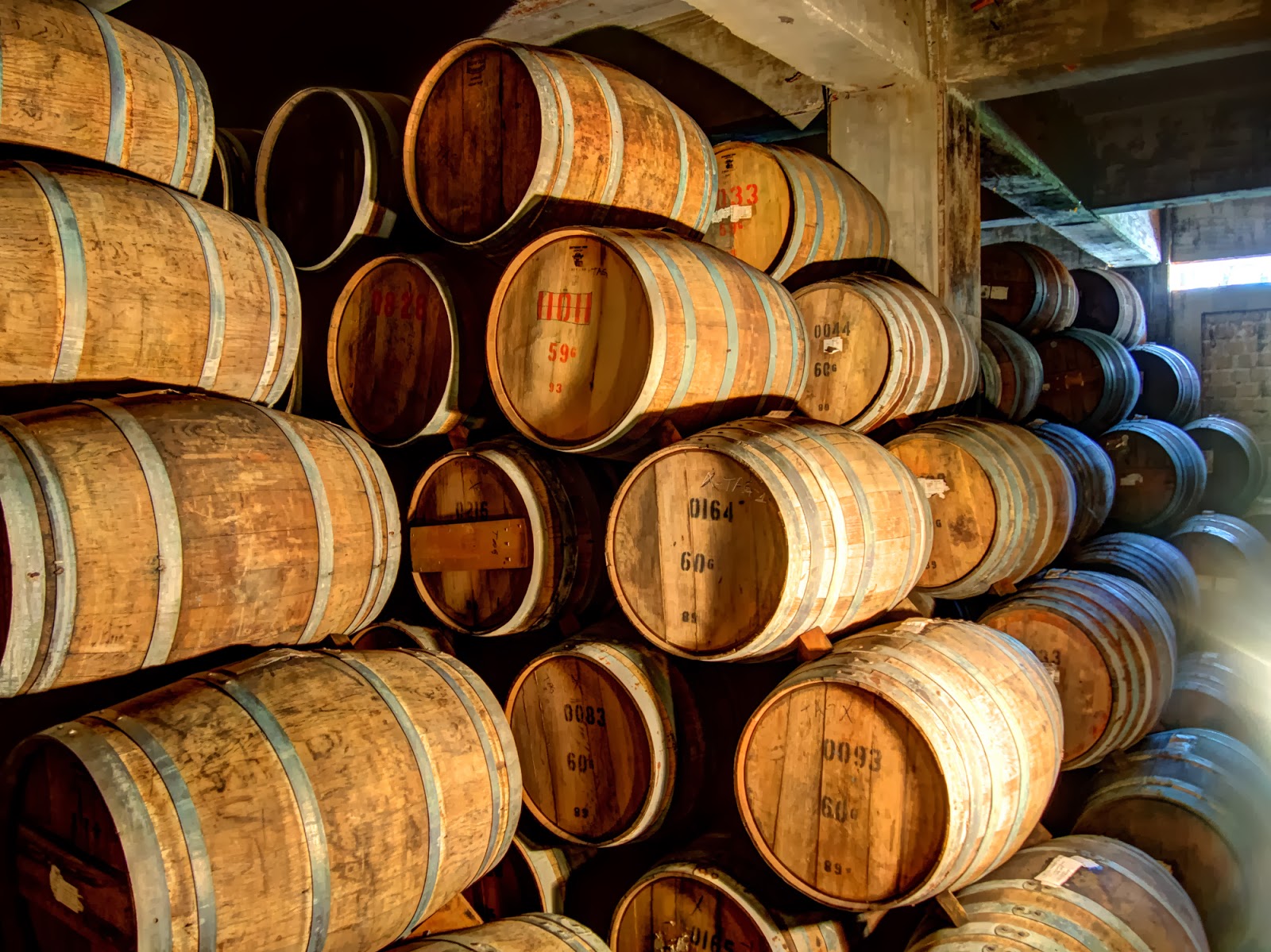
night's party was to be a the Fortaleza distillery and in its
adjacent hill set cave, developed to accommodate aging barrels and
guests with a dimly lit bar in the back. Locals were catering and I
had the best churros I've tasted in all my life. I stole away from
the party with two others for a moment to climb a hillside agave
field and lay out on stones beside the hill path. Above us were
stars I hadn't seen in too long – the stars behind the stars –
and fruit bats whizzing about, their nights having just begun.
I
rejoined the fray in the cave and took some reposado. And then some
more. An Englishman borrowed a local's guitar and delivered a
gorgeous set of American southwestern style folk music with a voice
scratched with tin and cactus needles (why are the English so good at
American music?). Shots were being lapped up from thighs under
raised skirts. Shouts and embraces of drunken camaraderie were in
every corner, culminating into proud and bellowing renditions of
Mexican anthems. It was my fantasy of what a wild night in Mexico
should be.
For
people who make liquor their living, a surprisingly large number of
us didn't seem to know how to pace themselves or eventually maintain
even a modicum of composure. Back at the hotel, a girl in the group
stormed up to our floor with a man I hadn't seen before – both of
them half naked – and inquired, “have any of you seen my
boyfriend?” Glass was broken. Fights were narrowly avoided.
Moans emanated from behind the banyos. Lips locked that would never
be recalled. It was great.
My
plane flew circles around Phoenix for almost an hour. There was a
thunderstorm during my layover and after the second aborted landing
the crinkle of paper and scent of vomit became increasingly hard to
ignore. I tried to disappear into my headphones to forget my own
nausea.
The
whole week prior was likely my most sleep deprived ever; that last
night in New York I took three hours of sleep, maybe. My two flights
and layover went by in an uncomfortable droopy eyed blur.
After
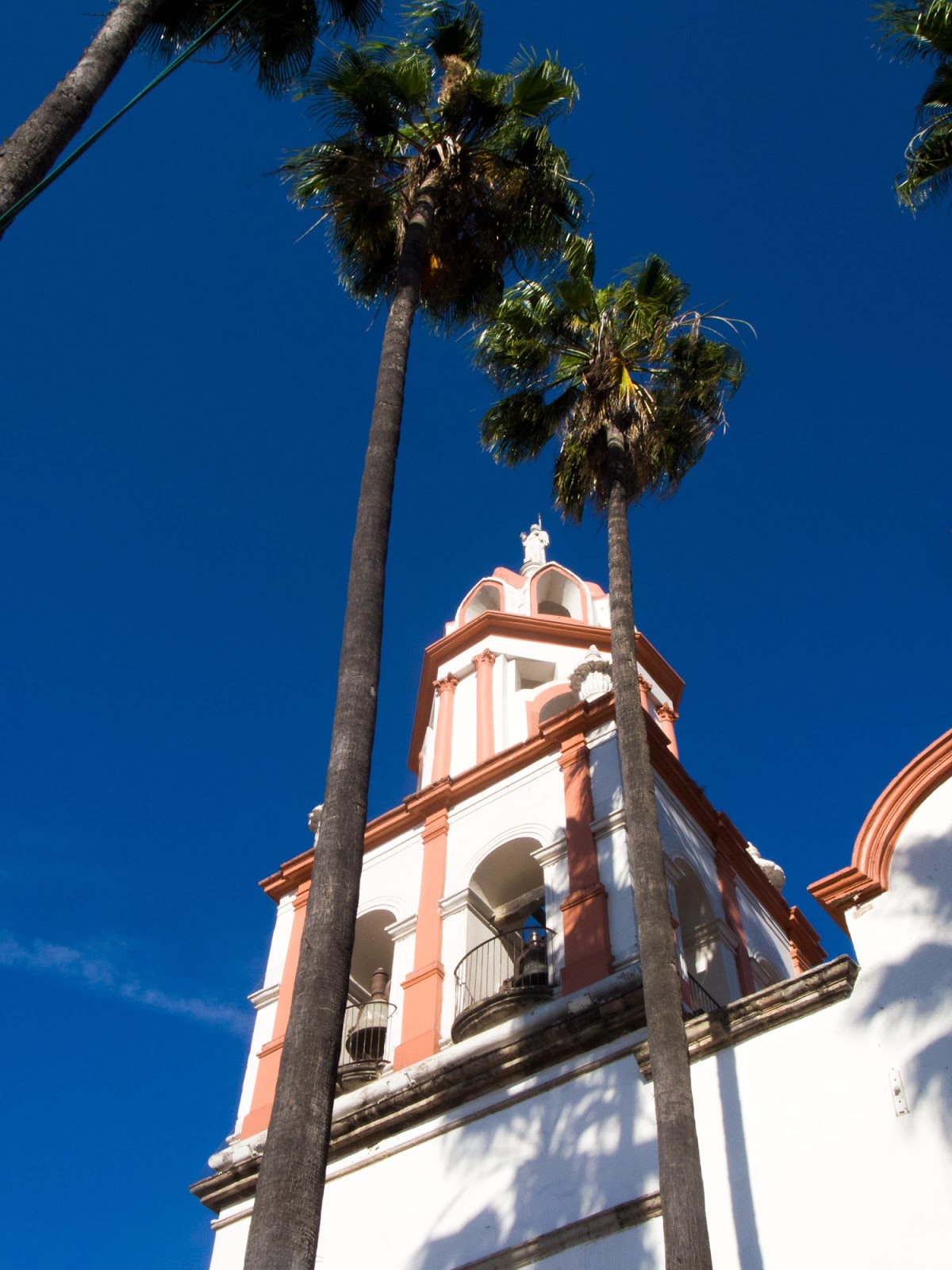
a snappy cab ride from the Guadalajara airport I was greeted by Rosy
in reception. She was one of the sweetest women I've ever met and
she welcomed me warmly to Mexico. We talked of mariachis, mezcal, y
mariposas. The rooms had names instead of numbers. Mine was paz
for peace. The hotel was far nicer than I ever require, me being
used to spending my nights on the road in dingy youth hostels and
living room couches. From the rooftop balcony I felt the warm air
and listened to the music of a mariachi band drift up from the main
square of Tlaquepaque and I felt very sure that I was soon to be in
love with this country.
In
the late morning I carefully stretched out the whole length of my
body, taut from deep and much needed sleep, and then followed a
chorus of laughter to the rooftop dining area. There I met some of
those who would become my companions bound in tequila for the next
four days. The firmest handshake I received came from Guillermo
Sauza: our host, the owner of Fortaleza Tequila, heir to the Sauza
name, and perhaps a contender for the living embodiment of the most
interesting man in the world. He wore a salt colored mustache, he
had texture in his cheeks and even more in his voice, and he
re-christened me as Matteo on the spot. There were several bottles
of his tequila at hand and I, in company, had about half a bottle's
worth. Most of anejo.
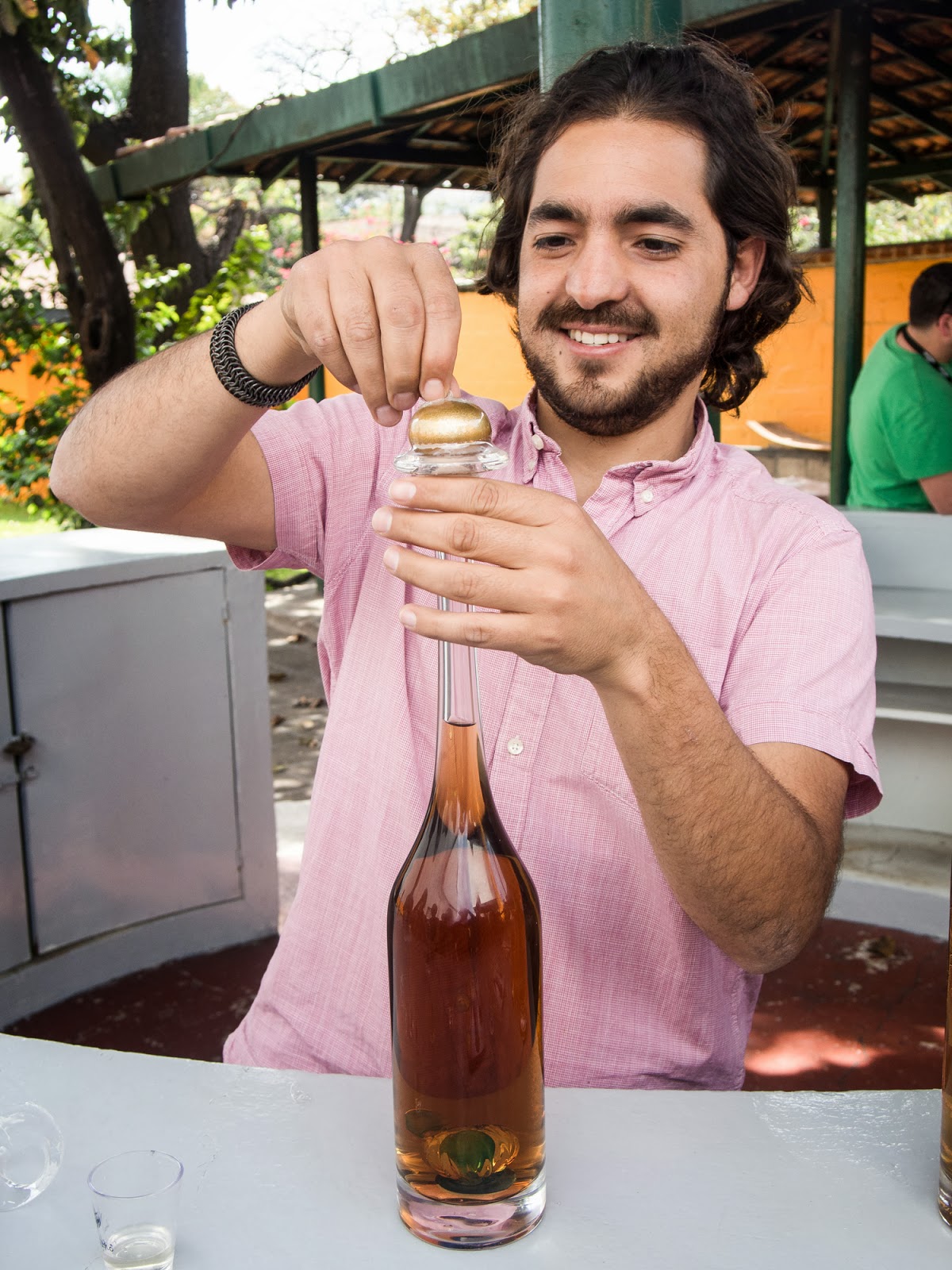
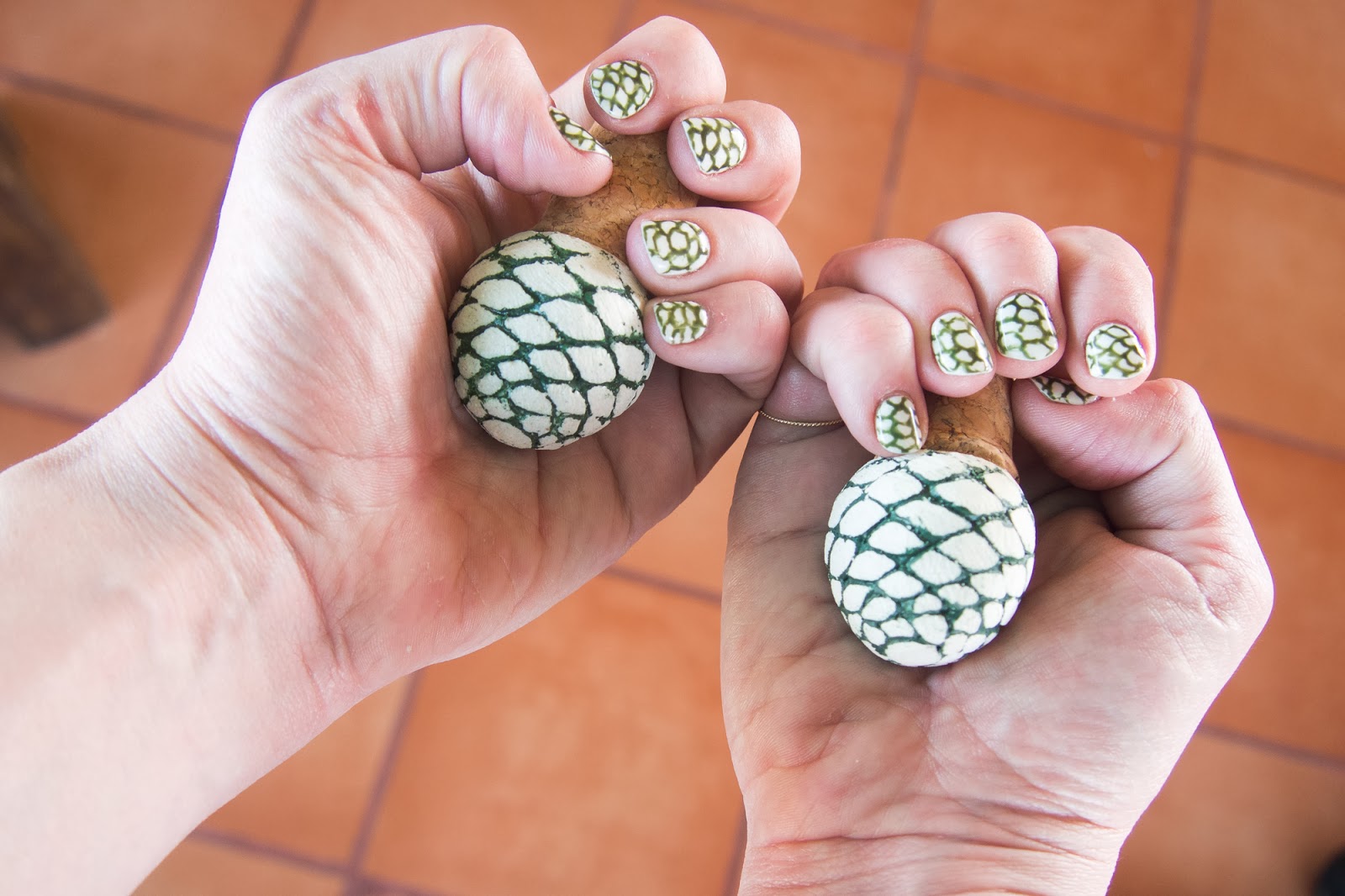
Fortaleza bottle stoppers
After
our liquid breakfast, we headed over to his second favorite
restaurant in Tlaquepaque with a few bartenders, some of his friends,
and his beautiful Labrador Sandy. He had long since boycotted his
favorite restaurant by their refusal to carry his tequila.
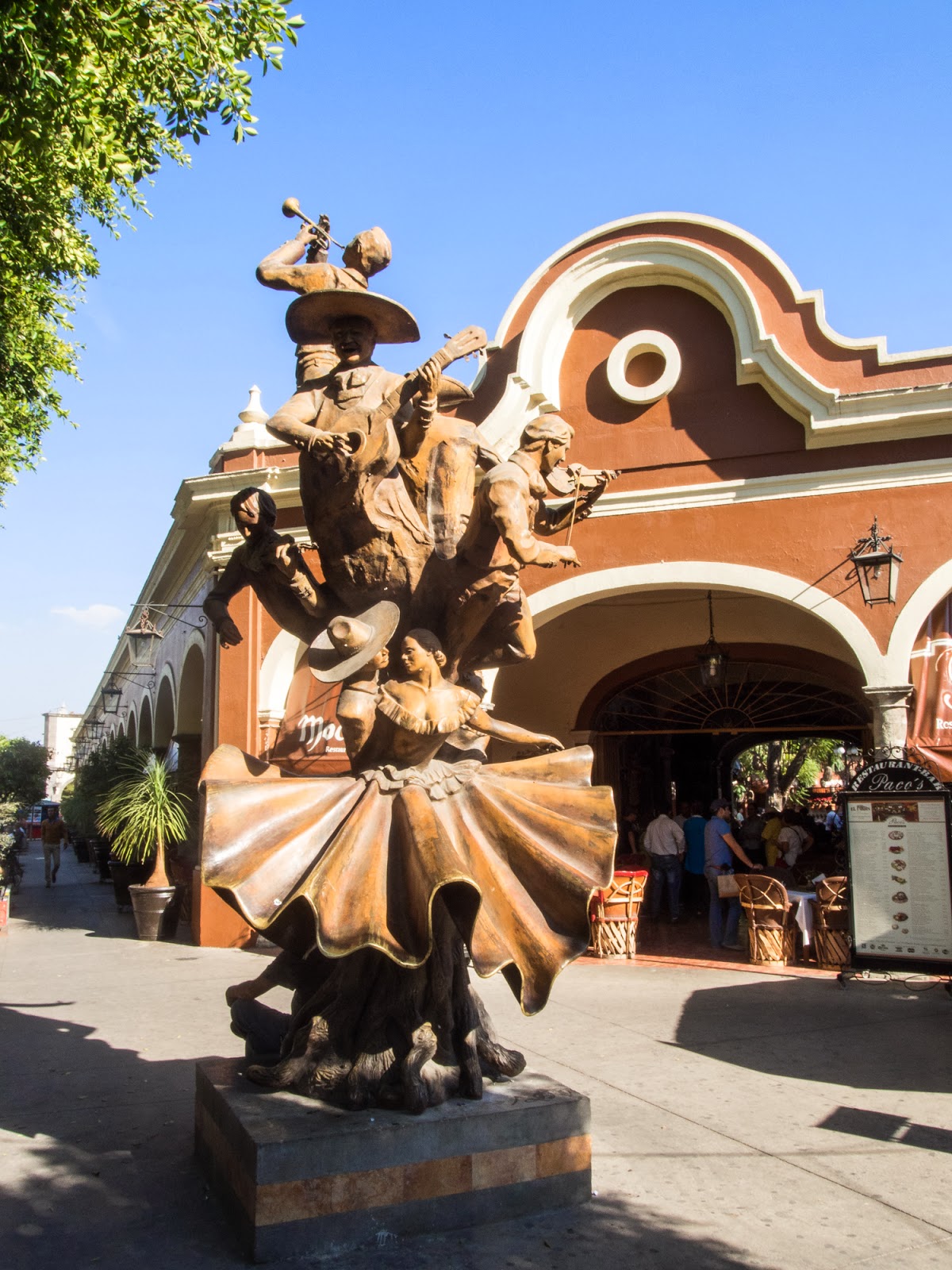
Tlaquepaque
is regarded as a suburb of Guadalajara and is celebrated for its well
preserved old Mexico charm. Mariachi bands run amok, serenading
locals and tourists alike. I followed a recommendation to a
Pulqueria by the cheeky name of Tlaquepulque. Pulque, a beer of
sorts fermented from agave, has been on my must-try list for some
time. Traditionally, the fermentation process requires enzymes form
the human mouth to kick start the process. You'd chew a bit and spit
it back into the mash. Modern pulque skips that step, or at least I
hope it does. It can be served in its natural form or dressed up
with a couple dozen different flavor additives. I typically prefer
things in their purest forms, but I really enjoyed trying different
pulques cut with strawberries, tamarind, and coconut. The addition
of sweetness, tartness, and/or fat to the mix help round out the
flavor, as pulque on its own is quite pungent and sour. I was also
pleased to see the place had a vegano
section on its menu, which helped alleviate some of the dread I had
about traversing Mexico as a vegetarian.
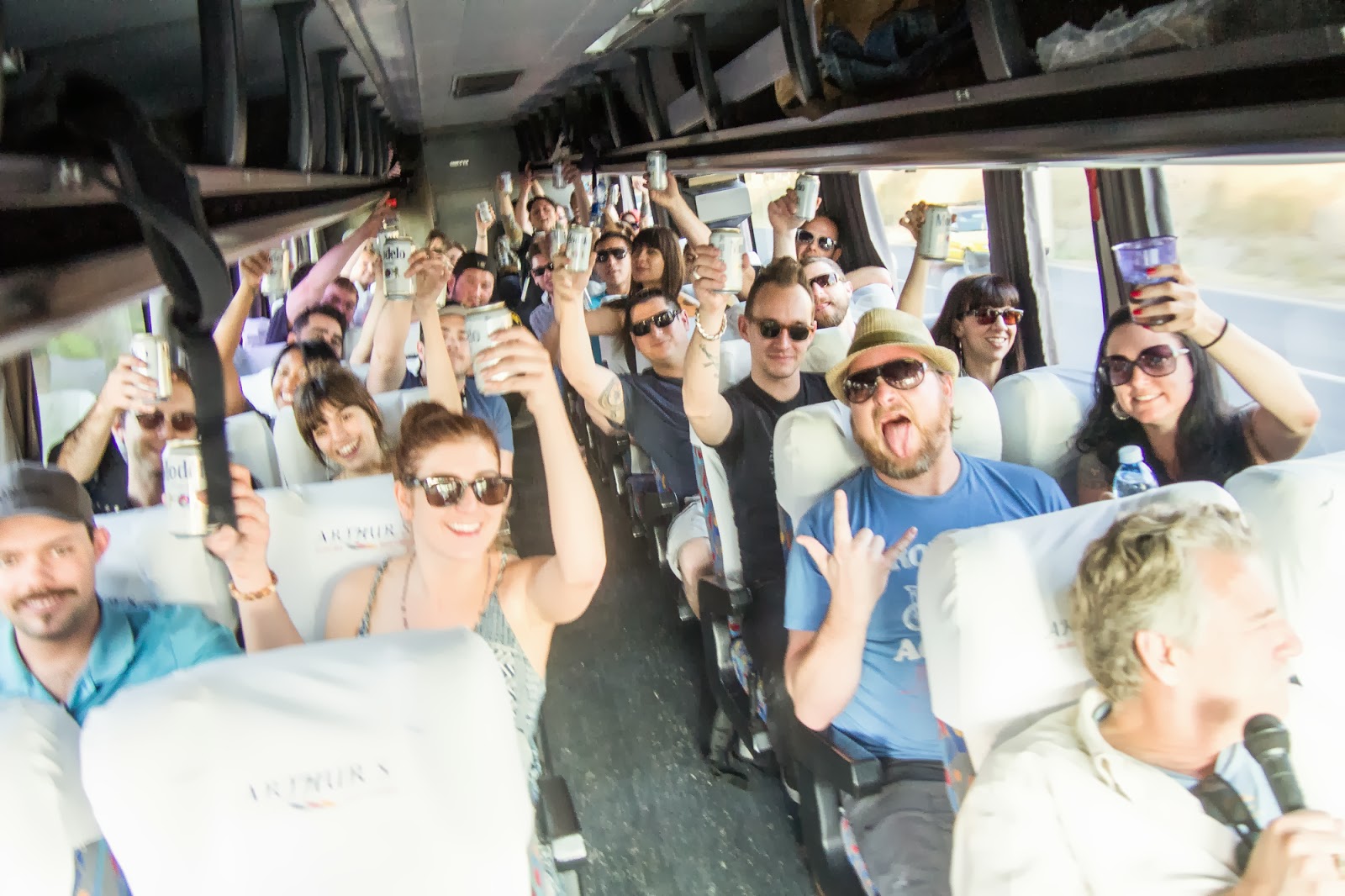
If
tequila breakfast wasn't warning enough that the next four days were
going to give my liver a run for its money, things were made very
clear when I was later in a bus full of mostly bartenders, each with
a cerveza in hand as bottles of tequila were being passed from front
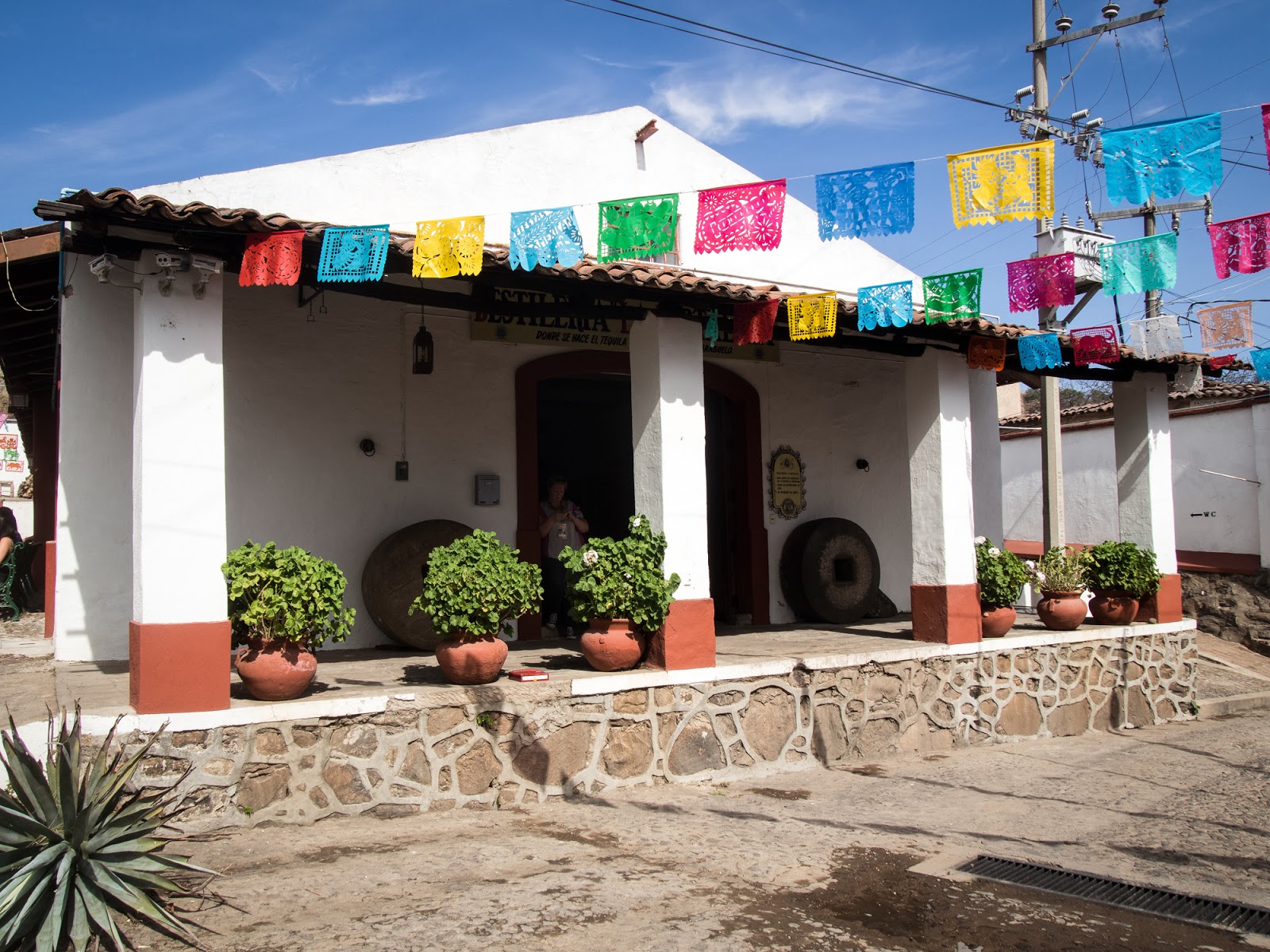
to back. Our destination was the town of Tequila, and a party was
waiting for us in a museum built out of the old Casa de Sauza.
For a time, Ayutthaya in central Thailand was the most populated
city in the whole world – its affluence was based on its strategic location
between the great trading powers of the world.
Built upon an island between three rivers, it was a point of convergence
for merchants from China to the north, India to the west, and the island
nations to the south, and early European visitors described it as being the
finest city they had ever seen. And in
all likelihood, you’d never even heard its name. I certainly hadn’t. Its heyday was short lived, as before the end
of the 18th century Burmese invaders had razed the city to the
ground.
The city has since been rebuilt and remains an important
transit hub for Thais and travelers commuting to and from the cities north of
Bangkok. I had gotten on my overnight
bus from Chiang Mai with two Ericas and gotten off at Ayutthaya with one; Erica
Camille had to continue elsewhere to shoot some weddings someplace beautiful
and Krumbein and I were to keep traveling elsewhere. So henceforth, if I mention an Erica, I mean specifically
an Erica of the Krumbein variety.
Despite being so thoroughly ransacked by the Burmese,
Ayutthaya’s monuments were built to last, and I again found myself on the seat
of a bicycle drifting through the crumbling stone husk of a long gone capital
city to an empire that no longer exists.
More than elsewhere I found myself meditating on impermanence and
questioning the worth of being and feeling important. Impressive spired stupas housed the remains
of kings worshipped as gods by people long dead in a city I had never heard
of. It occurred to me that I could theoretically
pass so many of the biggest film and music stars, writers, and politicians in
the world alive today on the street – cultural darlings, contemporary gods
worshipped by masses in India, China, Thailand, wherever – and I wouldn’t not
even notice or perhaps even really care if I did.
At the feet of stupas, between the walls of monasteries, and
before the smiling stone face of Buddha, magically consumed by time and the
strangling roots of a Banyan tree, I felt the same humbling sense of
insignificance one does when they get far away from the city and see in the
night sky the multitudes of stars in the cosmos that city lights bury in their
electric haze, and I again felt somehow liberated. In the past I had occasionally found myself
feeling adrift and listless – without a sense of purpose that I could throw the
full weight of my confidence upon. Time wears us all to dust, kings and paupers
alike. Good deeds and crimes of
depravity all become forgotten eventually.
Yet, what once felt like meaninglessness to me and used to fill me with
angst and dread now somehow makes me feel like I have the freedom to define
meaning for myself – play by own rules, or something like that. I no longer want to achieve impossible
things, conquer nations, or have my name engraved in stone. I just want to have a good life, learn, see
beautiful things, hear beautiful music, and eat beautiful foods. Until I’m dead. I very much think there can be something
cheerful about nihilism if you look at it the right way, and I’m aiming to live
my life such that I can lay on my death bed without regret.
In The Master tattoo parlor Erica K. spent three hours
getting stabbed with a bundle of needles tied to the end of bamboo sticks. Before getting to work, the master held a
pair of these sticks like chopsticks as if he was going to be eating stir fry
instead of carving art into my friend.
After laying down a temporary outline of the concept art he set to
dipping the needle tips in ink and then carefully jabbing the skin of Erica’s
back along the curvy lines that would eventually become a three headed
elephant. Compared to the modern
tattooing process, bamboo tattoos hurt less and heal more quickly.
Modern Chiang Mai radiates from the square shaped moat of
the old city. It’s Thailand’s second
largest city and something of a laid back hippy town nestled at the feet of
several mountains. Many of the Thai men
there rock long flowing hair and share the streets contrasted by bald monks and
countless westerners. It seems there are
as many monasteries as 7-11s (which is actually saying a lot). Caucasian-native couples are more abundant
here than anywhere else I’ve seen, though I’ve yet to see a male Thai with a
lady farang (though I’ve seen a few male Thais with male farang (foreigner), so
at least some of the Thai guys are getting some action). The age disparity between some of the mixed
race couples can be unsettling when you’re having breakfast next to a 60 year
old man and an 18 year old Thai boy.
Across the street from where we were staying, I experienced
my first Thai massage. After changing
into traditional Thai pants, stretching out, and exhaling deeply, I was
mentally prepared for a long overdue pampering that I was wishing I hadn’t so
long delayed – but when my hips were suspended in the air while my masseuse was
sinking his elbow into my groin, I realized I was in for something a little bit
different. Thai massage requires a bit
more audience participation than other styles and probably resembles couples’
yoga at times, except where one participant remains limp at all times. While the numerous contortions and deeply
penetrating elbows were unexpected and even seemed silly at times, the
technique was incredibly effective at
finding and eliminating knots, and I felt bundles of muscular irregularities
being crushed away in places I didn’t know they could exists.
Despite nuking my system with antibiotics, I still hadn’t
quite recovered from the illnesses I suffered in Bangkok and therefore maintained
my lazy pace. My lethargy coupled with
my being in the presence of a professional photographer meant my camera
remained in my bag most of the time; after touching the graceful contours of
her Canon, I increasingly disdained my own piece as a mere toy.
We were staying in the home of Spicy Joe, a Thailand native
Erica C. had befriended the year prior.
He awaited us in the mountains in his eco-lodge resort and after a few
days in Chiang Mai, we piled into an SUV and enjoyed one of the most scenic
drives through the jungle mountains of northern Thailand until we reached The
Spicy Joe Bungalows.
The jungle mountain road was steep – steep enough to cause
engine failures in our SUV as it lurched its way up the mountain paths. The SUV was carrying too much weight so we
stopped to leave provisional bags of salt on the roadside for later
pickup. I could barely make out the
moonlit fronds decorating the hillsides and despite my illness I felt alive and
full of electricity for my new love of the jungle.
We finally parked and then hiked down a hill stepped with
rice fields to a series of bamboo bungalows.
It’s silly to have an expectation that a thing like dirt should be
exotic but I was somehow surprised to find that dirt smells like dirt, and the
smell of Thai dirt kicked up to my nostrils brought me back to trails I’ve
covered in Nevada’s deserts and New England’s mountains all at once. We could hear singing from the solely
occupied bungalow. Soft candlelight and
a happy birthday chant leaked their way through the gaps in its bamboo walls
and tickled the darkness. Inside, laid
out on the floor, was a room full of welcoming faces and a Thai feast –
including vegetarian options in consideration of my arrival. An old Thai man played some kind of wooden
harp and we passed around “jungle juice” made from fermented rice. I knew I was in for a good time.
The hills in these mountains are home to the Karen tribes,
Thailand’s largest hill tribe ethnic group, and Joe’s bungalows are staffed by
smiling Karen natives. In the morning
light I could finally examine the place.
Between bamboo huts are rows of garden vegetables, eggplants and yellow
and black bananas. A chicken, an ornery
goose, and two young pups provided additional company in the gorgeous mountain
top setting, with an overlook showcasing a great valley full of trees save for
where water runs and villagers have built shelter.
Guests can stay at the bungalows as either paying customers
or working volunteers, assisting in whatever tasks are required to help the
bungalows expand or improve. Spicy Joe –
Samart in actuality – is a long haired Thai with a Che Guevara tattoo on his
upper arm, an impressive repertoire of situational jokes and innuendos, and
mean cooking skills in his little Thai kitchen.
He consistently put out some of the best Thai food I’ve ever had and in
portions that always had me rolling about the bamboo floor feeling like a
beached whale. If asked, he’ll tell you
he went to university to learn how to break the heart of the western woman, and
it was maybe then I realized I was the only westerner in his little eco-resort
that can pee standing up (and thinking back to his pictures of visiting
travelers in his home and the scarcity of masculine faces there doubly
confirmed for me his overwhelming preference for the company of lady
volunteers).
The work he had set aside wasn’t exactly light. Our first assignment involved clearing a
large portion of land of jungle growth to make way for fencing and eventually
more bungalows. Hacking away at bush and
vine alongside his employees made the work easier thanks to their infectious
cheerfulness. All the Karen men shared
Joe’s love cracking jokes and there were many smiles shared among the heat and
the sweat. The word for fun in Thai is Sanuk and is an important part of the
Thai lifestyle. They believe if it’s not
Sanuk it’s not worth doing, and their
ability to infuse joy into labor was something I enjoyed seeing first hand.
Bushwacking proved to be an exciting challenge, and it felt
good to exert myself under the sun after a week and a half of being sick and
sedentary (perhaps it was the mountain air or my love of the jungle, but my
arrival in the bungalows seemed to coincide with my recovery). For such a conservation minded guy, I surprised
myself at just how much I enjoyed seeing my skill in felling trees with a
machete improved. Experimenting with the
efficacy of different techniques, I found myself getting quicker in my side to
side mowing of brittle grasses and freeing tree limbs from trunks and the
tangle of vines. In a moment I could
decimate a sizable bush by clearing one side to its base, stomping the rest of
it over to the opposite side, and hacking at the bottom until the entirety was
liberated from its roots. The refuse of
flora would then be arranged in large piles and set ablaze (“for barbeque
tourist”). The standing jungle foliage was
so dense and moist the fires could be set next to the forest with confidence
that there would be no outbreak. Who
knew slashing and burning could be so fun?
I had never created such a literal swath before, and I stood looking
over what was once jungle growth with the pride of a Viking pillager. An errant blow from my machete accidentally
tore off a section from the dome of a termite mound and I peered inside with
fascination at their intricate tunnels. At
some point one of the workers chased the bees away from a fist sized honey comb
and we took turns squeezing fresh honey into our thirsty mouths.
After the long work day was over, it was time to shower, but
the waterlines weren’t functioning. This
meant we would migrate from the mountain top bungalows to the waterfall side
bungalows to do our bathing in stream water.
The pickup we hustled into became filled up quickly which I used as an
excuse to commute Asian style, and I clambered up to the roof to join locals
Den and Chico for the most thrilling commute of my life. Each of my limbs was wrapped around a
different part of the roof rack so as to keep myself from being flung as the
truck navigated bumpy and steep mountain roads in 4x4 mode. The lovely jungle scenery flew about me in
360 degree’s, but I had to be always mindful of the path ahead so I could dodge
incoming vines and branches. The roof
rack was hardly comfortable as it jerked beneath the seat of our pants and threatened
to turn us into ladyboys, as Den joked.
The waterfall was a welcome sight and everyone stripped
quickly to bask in its spray and wash away the day’s toil. The water came tumbling down a cascade of
rock held together in parts by massive jungle roots. Overhanging vines begged me to swing from
them, but the pool’s shallow rocks forbade such a thing. Unexpectedly, two of the paying guests
recognized me; we had both had our breakfasts interrupted by marauder monkeys
in the Indian desert town of Pushkar.
With happy disbelief we swapped tales of our travels since that morning. They, Germans form Hamburg if I recall, were
following a similar trajectory as myself but with a whole year and a half
allocated for their journey.
One lazy night, Erika K. and I stayed up to watch Rambo 4
which was shot in the vicinity, and has John Rambo crossing the border into
Burma to save Christian missionaries and Karen villagers from genocide. The movie was crazy violent, but full of
absolutely gorgeous scenery. I later
found out one of Joe’s employees, Den, had actually helped location scout for
the film, and I envied his intimate knowledge of such wonderful places.
The next day’s work was something less glamorous; we spent
the midday bent over in a river picking and bagging smooth stones to bring back
to build footpaths with.
I could have easily stayed a week or more, filling my days
with treks and volunteer projects, but my visa was soon to expire. Having crossed over land, I was granted only
a 15 day visa compared to the 30 days granted to the Ericas for their arrival
via air. So I had to get down the
mountain and position myself for a quick border crossing for a fresh two extra
weeks’ allowance. I had one last
too-large Thai meal care of Joe, bid my farewells to the friends I had made,
hopped into an SUV, and fell in and out of sleep as my driver, the half Chinese
Mr. Thong, sang his way nasally back to Chiang Mai.
The path to Burma from Chiang Mai is well trodden by expats
and foreigners hoping to squeeze just a little bit more out of their holiday. Competing tour companies offer vans that head
straight to the border and wait on the Thailand side just long enough for its
commuters to walk across the border, pay for a few stamps, and slurp down some
noodles before heading back to Chiang Mai.
I spent the whole day on my ass, but the scenery boasted by the north
Thailand country side is nothing short of lovely, with jungle carpeted hills carved
in to the oddest shapes by serpentine rivers and low rolling hills made me want
to buy a motorcycle and get lost in them forever. The atmosphere in the van was unpleasant; no
one wanted to spend the day in a single seat waiting to be returned to their
point of origin, but luckily a shuffling of seats had me sitting next to a
curly haired San Franciscan girl who seemed to be the only conversationalist on
the minibus.
The two countries are divided by a thin and mild river and a
bridge conducts traffic between them. A
break in the middle of the bridge permits foot and auto traffic only one way at
a time; drivers from Thailand drive up on the left side of the road and have to
switch to the right in Burma (and of course vis versa).
Border customs officers are notoriously corrupt. I’ve had made friend whom were bribed an
excess amount before permitted reentry.
The Burmese officer I met was both round of face and of belly. His toothy grin was stained with the blood
red of betel nut – a habit that seems confined to the Burmese side of the
border. They refused to take my
supposedly kosher USD, instead demanding I pay in Thai baht, at a rate inflated
to almost double the value. I hate
passionately rewarding dishonesty, but I tried to use my known powerlessness to
deflate the bitterness I felt at getting ripped off. Nothing I could do would change
anything. On the way back I stopped to
admire a transparent box full of confiscated contraband, a huge chest full of
toy guns, knock off prescription drugs, and discs of pornography.
I came back to Saturday night in Chiang Mai and a house full
of everyone from back at the mountains.
Poor Camille’s eyes had become glued shut from an infection during an
elephant trek, but Krumbein was in sporting shape, so we hit the town looking
for a fight. On a street full of western
style pubs we let ourselves get pulled into a small stadium where we were
seated nearly ringside and waited to watch our first Muay Thai fight, but not
before getting properly buzzed from terrible margaritas and tall bottles of
Thai beer.
Before every Muay Thai boxing match, the fighters perform an
odd ritual; they circle the ring with a hand coasting on the ropes, roll their
fists in the air, and get down on their knees for little bows, all to
traditional Thai music. The first fight
was over quick. A flurry of jabs and
some round house kicks. The fighters lock
arms in an almost intimate embrace and exchange rapid knee kicks to each
other’s sides. One last punch to the ribs
sent the loser to the ground. Krumbein
and I had taken to betting, and I had a bad habit of rooting for the tall lanky
guy.
After returning to my seat with a beer from a bar staffed
with large breasted ladyboys (and a devious bowl of peanuts with anchovies
hiding at the bottom waiting to ambush my unsuspecting mouth), three men with
blind folds and boxing gloves jumped in the ring. One of them was a midget. The three pounded each other silly to a crowd
of cheering jackasses – myself included.
I didn’t care if it
was more touristy than a fanny pack, the next day we hunted for a Dr. Fish
spa. You’ve probably seen photos of
goofy white people with their feet dangling in a tank full of toothless fish
nibbling away at their dead skin. The
sensation isn’t unlike that of bubble jets in a Jacuzzi, but more… I guess I
would say tickly. My feet were in a
frightful shape from all my traveling about in the same pair of boots so I
figured I’d be a special treat for these foot guzzling fishes. They hadn’t quite liberated me from my tough
white callouses the way I was hoping they would, but I’d say my feet felt something
softer after the experience.
More words and photos from Erica Camille's blog follow:
“Illicit drug trafficking will be punished with death penalty,” a
sign warns at the Thai side of the Cambodian border, but written in that jagged
lightning bolt font used for the Harry Potter movies, as if to say, “drug
trafficking will be punished with death penalty and a deduction of ten points from Gryffindor!” The departure line on the Cambodian side moved
at a glacial pace and the Thai side was even worse. Behind me a Chinese tourist crept alternatingly
on my left and right sides seeming ready to pounce in front of me, as if
leaving a finger’s length of space between myself and the person in front of meant
forfeiting my position in line. She spent
the whole afternoon nipping at my heels.
The terrible human like wailing of caged pigs occasionally added to the ambiance as obscenely packed cargo trucks full of Thai swine were made into exports
as they crossed the border. The aroma of
their filth and despair wafted in behind them.
At last, inside the customs office, fans offered relief from the heat
and televisions some respite from boredom.
10 minutes with a Thai daytime variety show confirmed nearly every
uncomfortable stereotype I had in my head about Thailand’s lax attitudes toward
sex and gender roles. The show was
hosted by grown men dressed like babies in pink and white gowns, and the talent
consisted of adolescents of occasionally indeterminable sex singing, dancing,
and dressing like adults. There’s a lot
of slapstick and tushy slapping. At some
point one of the man-babies picks up a maybe-boy-maybe-girl wearing a wig and a
gown revealing lots of leg and starts kissing him/her on the tummy. It had me shuddering to think what kind of
antics happen in Thailand outside of television
broadcasting.
It had been nearly two and a half months since I had seen a
familiar face, and the accumulation of loneliness and discomfort had diminished
my spirit of adventure, but waiting for me in Bangkok was two Ericas, friends
from New York who were also planning to be in Thailand. Reuniting with them – seeing their faces –
and conspiring adventures to come brought a complete resurgence to my spirits
and made being on the road feel like home again.
One of the Ericas, Camille let’s say, has spent plenty of
time in Thailand and was happy to share her experience and companions with the
two of us. We stayed in a spacious
apartment full of expats from all over the world. Other travelers like us also passed in and
out of the place and the nightly shuffling of human beings meant every morning
I woke up in a different part of the apartment.
Canals are still an important way to get around in Bangkok
In total, we stayed in Bangkok an entire week, but I don’t
have a week’s worth of Bangkok to relate because I spent the entirety of my
time there ill. And it’s my fault, too. I was nurturing a mild case of food poisoning
from Cambodia and didn’t let that stop me from regaling my reuniting with
friends with great quantities of Thai beer.
My mild sickness coupled with a hangover and made me vulnerable enough
for a nasty cold virus and maybe something else. My sinuses felt inflated enough to crush my
teeth to powder, I had migraines that increased in severity as the day passed
on, and worst of all, I suffered a crippling fatigue that made it difficult to
leave the apartment. The building,
though, had a swimming pool… so I guess in some way, I picked a fine place to
be sick (though I did find myself terribly disappointed that I couldn’t better
enjoy this exciting city and the great new people I met there).
Protective talismans are popular with many Thais
So far, Bangkok is the only truly modern city I’ve seen in
Southeast Asia (oh, I forgot about Kuala Lumpur). The metro rail is fast, clean, and efficient,
the commercials playing in fancy malls and in the subway cars have impeccable
production value, and Bangkok’s very fashion minded youth look like they work at
an Urban Outfitters. Bangkok has a
reputation for exceptionally cheap tailors so I made appointments to have a
sports jacket that I had been dreaming of owning cut from scratch. After choosing the fabric, being measured,
and laying down all my specifications, however, the jacket’s cost ended up
being marginally less than my trusted tailors in Los Angeles or New York would
have cost, so I made some silly excuse and left the tailors’ district disappointed. This experience would repeat itself at the
hip weekend market and a few malls. I was hoping to scoop up lots of loot in
Bangkok and show up to Hong Kong and Los Angeles looking like a baller, but
with frustrating consistency everything was too small, too Asian, or too
shoddily constructed – and if it wasn’t any of those things, that meant the price
tag would somehow match or even exceed those of New York’s, so I eventually
gave up on my dapper on the cheap aspirations.
It was clear very quickly that Thailand and Cambodia are
close cultural cousins – reflected most immediately by the classic
architecture, music, dress, and food – but I’m reluctant to say Cambodia is
left the paler of the two in almost every way.
Thailand’s monasteries are similar but dazzling by comparison in scope,
color, and intricacy. Even the tiny
spiritual bird houses that sit outside every home and business are more
impressive here. There’s an expectation
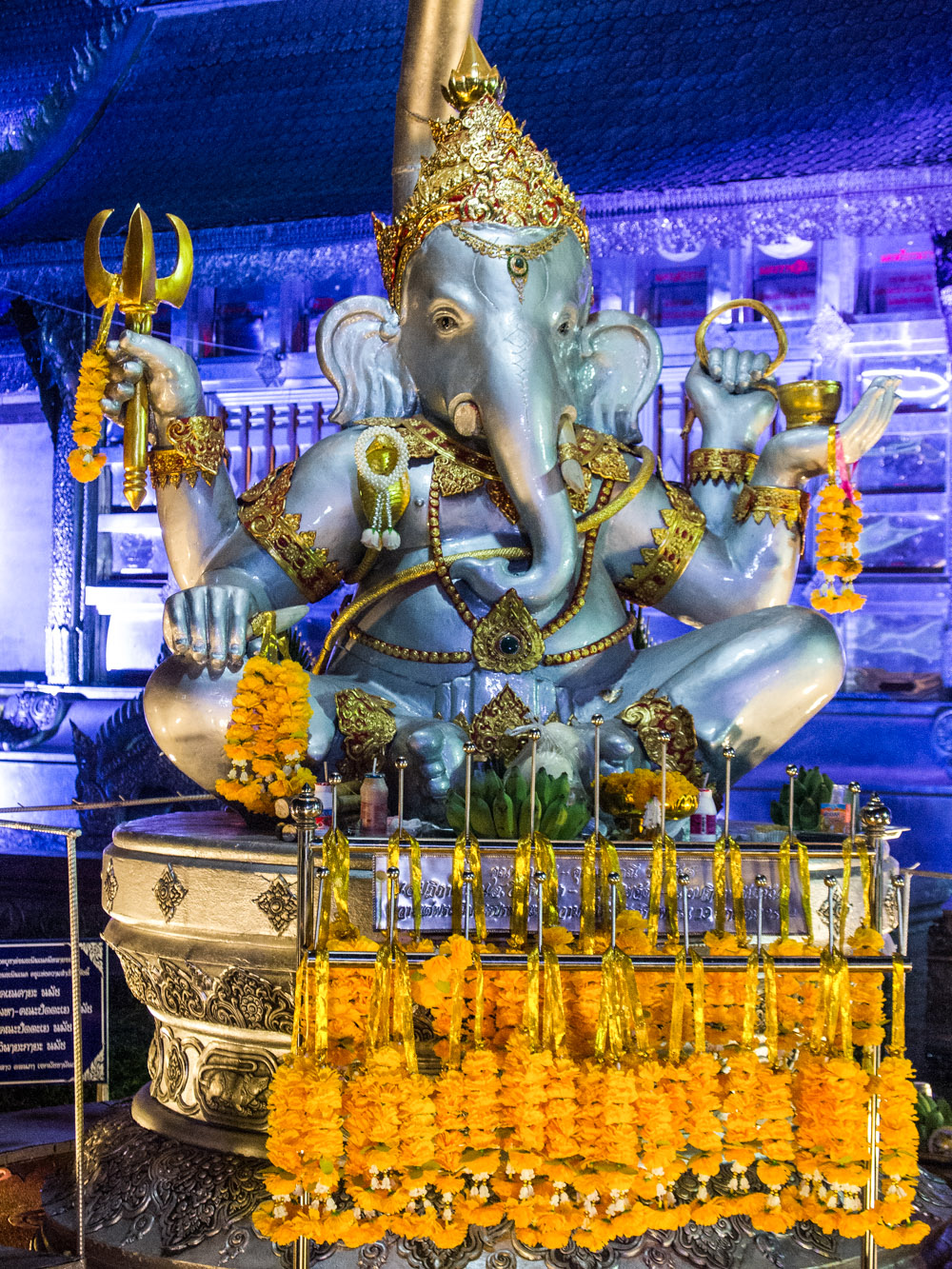
that big businesses care for more extravagant shrines: outside of one hotel a
large shrine houses a golden four headed Brahma, and a small team of
classically trained dancers await donations from the public. When someone feels particularly grateful to
the gods for something, they can show their appreciation by paying the dancers
to perform on their behalf. Behind
another hotel, another shrine has become famous for its powers of instilling
fertility and is rampant with carefully arranged phalluses – enormous penises
stacked in rows and perched erect along the garden’s walkways. Thai food has so many similarities to the
neighboring Cambodia’s cuisine, but it’s difficult to compare. Thai food is so good! Spicy, fresh, sweet, sour, and salty – and the
street food is some of the cleanest in the region. My taste buds have been the second happiest they’ve
been on this journey (sorry Thailand, but it will take more than that to
dethrone India in my heart – or in my mouth, rather).
I don’t mean to make these comparisons to belittle Cambodia –
I truly admire Cambodia – but it seems to me Cambodia’s relative mildness could
be a direct result of its recent and tragic history. The Khmer Rouge killed artists and educators
first. They destroyed museums, schools,
and monasteries. Culture was a great
casualty of the genocides, and Cambodia is still suffering a handicap as a
consequence. The Khmer people once ruled
nearly all of peninsular Southeast Asia and it makes me bitter to think how
much they’ve lost to that pointless genocide.
Being overspent, sick, and tired, my camera spent more time holstered or in my bag than normal. Or perhaps this was mostly due to the fact that I was now traveling with Erica Camille, who happens to be a terribly good photographer. Either way, here's a link to her own travel blog:
Until Camille and I part, I'll be supplementing my posts with links to her own. You can get a different take on some of the same events and enjoy her beautiful eye on the world.